
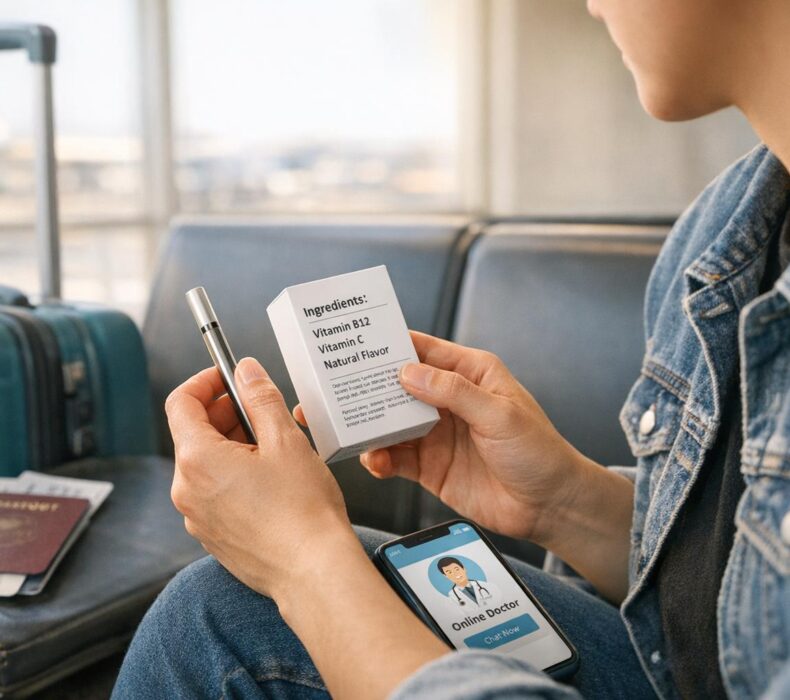
Traveling with vitamins can be a hassle, but vitamin vaping offers a portable, water-free alternative. These devices, also called wellness vapes, deliver nutrients like B12, melatonin, or caffeine vapes through inhalation, bypassing digestion for faster absorption. Compact and TSA-friendly, they eliminate the need for bulky bottles, water, or strict timing – perfect for travelers battling jet lag or tight schedules.
However, safety concerns remain. The FDA hasn’t approved these devices, and some ingredients, like vitamin E acetate, have been linked to lung injuries. Always consult a healthcare professional before use, check ingredient safety, and follow TSA and local vaping regulations to avoid issues.
Key takeaways:
- Convenience: No water or bulky bottles needed.
- Fast absorption: Directly enters the bloodstream through the lungs.
- Safety concerns: Research is limited; consult a doctor before use.
- Travel tips: Follow TSA guidelines and check vaping laws at your destination.
Vitamin vaping could simplify your wellness routine on the go, but use caution and prioritize safety.
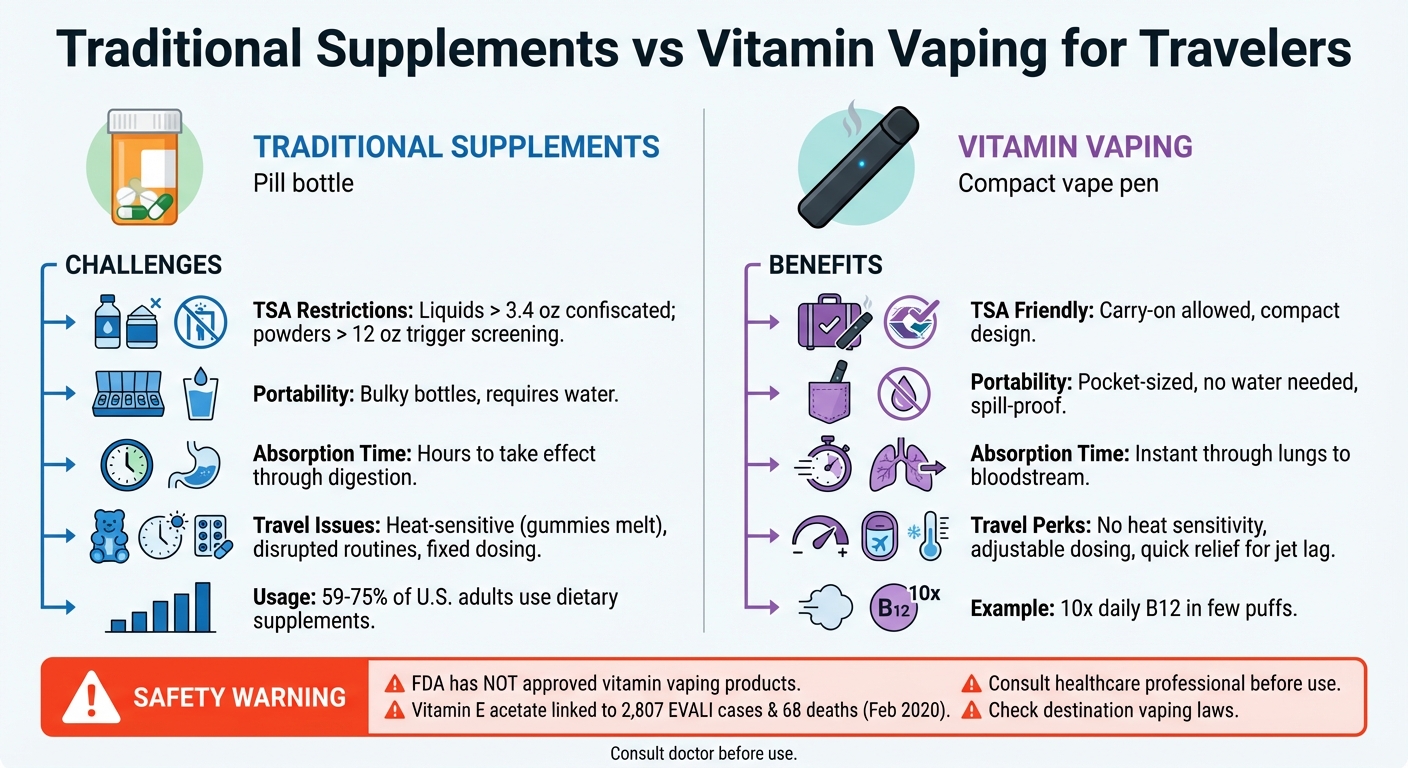
Traditional Supplements vs Vitamin Vaping for Travelers Comparison
Common Problems with Taking Supplements While Traveling
Packing and TSA Restrictions
Traveling with supplements can quickly turn into a logistical nightmare, especially when navigating airport security. Liquid vitamins are particularly tricky due to strict TSA rules. Anything over 3.4 ounces (100ml) will be confiscated, and all liquid containers must fit into a single quart-sized clear bag. As Calmour puts it:
Liquid vitamins over 3.4 oz WILL BE CONFISCATED. Follow 3-1-1 rule strictly or use alternative formats.
Powdered supplements aren’t much easier. Any container larger than 12 ounces (340g) triggers additional screening, which could mean TSA agents swabbing the powder for explosives or even opening the container entirely. Considering that between 59% and 75% of U.S. adults use dietary supplements, it’s surprising how few realize the potential hassle at security checkpoints.
Then there’s the issue of heat-sensitive supplements like gummies and softgels. Wholesome Story highlights the problem:
Gummy vitamins are highly vulnerable to heat. These chewy supplements can melt into one big mess when it gets hot in cargo areas or on airport runways.
Trying to save space by using unlabeled containers might seem like a smart idea, but it can lead to confiscation or delays as TSA agents scrutinize the contents.
And even if you make it through security unscathed, keeping up with your supplement routine while traveling introduces a whole new set of challenges.
Disrupted Routines and Absorption Issues
Traveling often throws off your supplement schedule, and that can reduce their effectiveness. For example, pills and powders require water, but flights, long layovers, or road trips often make clean water hard to come by. Missing doses can leave you feeling tired and sluggish, which is the last thing you want on a trip.
Jet lag and changing time zones only add to the problem. Take melatonin vapes as an example – it works best when taken 30 to 60 minutes before your target bedtime at your destination. But irregular schedules can make sticking to that timing almost impossible. On top of that, supplements packed in checked luggage are exposed to extreme heat and pressure, which can degrade their potency before you even use them.
Travel stress doesn’t help either. Digestive issues like bloating, constipation, and irregular meals can interfere with how your body absorbs nutrients, making your supplement routine less effective.
These obstacles highlight why finding a better, travel-friendly solution is so important.
sbb-itb-364f168
Vitamin Vaping: A Travel-Friendly Alternative
What is Vitamin Vaping?
Vitamin vaping is a nicotine-free way to inhale nutrients like vitamin B12, vitamin C, vitamin D, and even melatonin. Instead of taking pills or powders, users inhale these vitamins in vapor form. Unlike traditional e-cigarettes, these devices are designed with vitamins and flavorings, steering clear of nicotine. Interestingly, the idea of inhaling nutrients isn’t new – research on inhaling vitamin B12 dates back to studies from the 1950s and 60s.
These devices are compact and portable, making them a convenient option for travelers who want to avoid lugging around bulky supplement bottles. For instance, HealthVape offers vitamin B12 pens starting at $19.99 and pods for $24.99. They also provide bundles like the FOCUS B12 Bundle, priced at about $49.99.
How Vitamin Vaping Works
The process is fairly straightforward. A small battery heats a liquid infused with vitamins on a metal coil, turning it into vapor that can be inhaled. Dr. Clare Morrison, a GP and Medical Advisor at Medexpress, explains:
The vitamin mixture is vaporised on a heated metal coil, then inhaled. The mixture is absorbed through the surface of the lungs… From there it goes straight into the bloodstream, and to the rest of the body.
This method skips the digestive system entirely, avoiding any breakdown of nutrients caused by stomach acid or liver metabolism. Thanks to the thin walls of the alveoli in the lungs, the nutrients transfer quickly into the bloodstream. This allows for near-instant absorption, a stark contrast to the hours it can take for traditional supplements to work. Aaron Scott, Associate Professor in Respiratory Science at the University of Birmingham, highlights the speed of this method:
Inhaling rather than swallowing these compounds results in faster absorption into the bloodstream, so, theoretically, the vitamins and supplements could act faster when inhaled.
For travelers facing jet lag, energy slumps, or disrupted routines, this rapid absorption can be a game-changer. There’s no need for water, mixing, or preparation – just inhale and move on. It’s this efficiency that makes vitamin vaping particularly appealing for those on the go.
Vitamins Can Be Inhaled, But Should They Be?
Benefits of Vitamin Vaping for Travelers
Now that we’ve covered how vitamin vaping works, let’s dive into why it can be a game-changer for travelers.
Portability and Convenience
Vitamin vaping devices are designed to be compact and easy to carry, making them a practical nicotine-free alternative to traditional supplement bottles. No more dealing with spills, lugging around bulky containers, or needing water to take your vitamins. These devices are small enough to slip into your pocket or carry-on, and their spill-proof design makes them perfect for travel – whether you’re on a plane, in a car, or breezing through airport security.
With just a few puffs, you can quickly access essential nutrients without any prep work. This makes them ideal for busy travel days or when unexpected fatigue hits. Plus, their discreet design means you can use them wherever you are without drawing unwanted attention.
Fast Absorption for Quick Results
Travel often comes with challenges like jet lag or sudden energy slumps, and waiting for a pill to kick in can feel like forever. Vitamin vaping offers a faster solution by delivering nutrients straight into your bloodstream through the lungs, bypassing the digestive process entirely.
For instance, some manufacturers claim that a few puffs can provide 10 times the recommended daily amount of vitamin B12. This rapid delivery system can be a lifesaver when you’re trying to reset your body clock after crossing time zones or battling travel fatigue. The quick absorption also allows you to feel the effects almost immediately, which is a major plus for travelers on tight schedules.
Adjustable Dosing
Unlike traditional vitamins that come in fixed doses, vitamin vaping puts you in control. You can adjust your intake based on how many puffs you take, which is especially handy when your needs fluctuate during a trip. For example, you might need an extra boost on a long-haul flight but less during a relaxing day of sightseeing.
This flexibility allows users to tailor their intake to factors like age, size, and lung capacity. It’s a personalized approach that helps you align your vitamin consumption with your body’s demands, all while staying within recommended guidelines to avoid taking too much.
Safety Considerations and Best Practices
Vitamin vaping might seem convenient, but it’s important to weigh the safety risks. The FDA hasn’t approved any vaping products to prevent, treat, or improve health conditions, and research on inhaling vitamins is still in its early stages.
Understanding the Ingredients
The ingredients in vitamin vapes can vary, and some may pose serious health risks. A prime example is vitamin E acetate, which was linked to the EVALI outbreak that led to 2,807 confirmed cases and 68 deaths as of February 2020. The CDC found this thickening agent in 100% of lung fluid samples from EVALI patients.
"The agent that might have led to [the EVALI outbreak] is called vitamin E acetate, [which] is something used to make the liquid look more viscous."
- Michael Ong, MD, PhD, Professor of Medicine and Health Policy, UCLA
Other common ingredients like propylene glycol (PG) and vegetable glycerin (VG) can form harmful compounds, such as formaldehyde, when heated. Even vitamins that are safe to consume orally can become problematic when inhaled. For instance, Vitamin C could irritate lung tissue due to its acidity, and Vitamin D may be harmful if inhaled at certain levels.
To reduce risks:
- Use only top vitamin vape brands and nicotine-free products verified by third-party testing to ensure safety during heating.
- Avoid synthetic flavorings, which can trigger oxidative stress and inflammation in lung cells.
Given these ingredient-related dangers, seeking professional guidance is crucial.
Consulting with a Healthcare Professional
Before using vitamin vapes, consult a doctor – especially if you have existing heart or lung conditions. Many people think they need extra vitamins, but true deficiencies are rare and should be confirmed with blood tests. Bring the product label to your appointment so your doctor can review the full ingredient list, including carrier liquids. Ask specifically about the safety of inhaling these substances.
"We know that some things that are safe when ingested are not necessarily safe when heated in a vape pen and then inhaled."
- Dr. Michael Ong
Packing and Using Vitamin Vapes While Traveling
Once you’ve addressed ingredient safety and consulted a healthcare professional, follow these tips for traveling with vitamin vapes. TSA regulations treat vitamin vapes the same as traditional vapes, regardless of nicotine content. Pack vape devices in your carry-on, as they’re prohibited in checked luggage due to the fire risks associated with lithium-ion batteries.
Here are a few key packing tips:
- Carry extra e-liquid in containers no larger than 3.4 oz (100 mL), stored in a single quart-sized clear bag.
- Store devices upright to prevent leaks, and ensure they’re powered off or locked before boarding.
- Never charge the device during the flight.
If your carry-on needs to be gate-checked due to space issues, remove all vape devices and batteries to keep them with you in the cabin.
Finally, check the vaping laws at your destination. Some countries ban all vaping devices, even those without nicotine, and violations could lead to confiscation or fines. Keeping devices in their original packaging can help TSA agents quickly identify them and prevent delays at security checkpoints.
Wrapping Up
Travel can throw a wrench into your supplement routine, but vitamin vaping offers a lightweight, fast-absorbing option to keep your wellness in check. Unlike traditional supplements, these portable devices slip easily into your travel bag and deliver nutrients quickly – without the hassle of carrying bulky bottles.
However, this convenience comes with a need for caution. The FDA has not approved vitamin vaping products for health benefits, and some ingredients, like vitamin E acetate, have been linked to serious lung injuries. Always read ingredient lists carefully, steer clear of harmful additives, and consult a healthcare professional – especially if you have any underlying health conditions. Safety should always come first.
If you decide to try vitamin vaping, make sure your device complies with TSA guidelines and check the vaping regulations at your destination to avoid any hiccups at security.
For travelers looking for a nicotine-free wellness option that’s water-free and easy to pack, vitamin vaping might be worth considering. To learn more about nicotine-free vaping products, visit No Nic Vapes.
FAQs
Are vitamin vapes actually absorbed better than pills?
There’s no solid scientific proof that vitamin vapes work better than pills when it comes to absorption. While inhaling nutrients sends them to the bloodstream through the lungs, experts argue that claims of better absorption lack dependable evidence. Additionally, health authorities have flagged concerns about both the unverified benefits and possible safety risks. Even though vitamin vapes might seem convenient, there’s no research-backed support showing they outperform traditional pills.
What ingredients should I avoid in a vitamin vape?
When it comes to vitamin vapes, it’s crucial to steer clear of harmful substances like heavy metals, volatile organic compounds (VOCs), and vitamin E acetate. These ingredients have been associated with serious health concerns, including lung injuries and toxic effects on the body.
To protect yourself, always read product labels carefully. Opt for products that explicitly state they are free from these dangerous chemicals. Your health and safety should always come first.
Can I bring a vitamin vape through TSA and use it abroad?
Yes, you can carry a vitamin vape in your TSA-approved carry-on bag, provided it complies with certain rules. For instance, batteries must not exceed 100 watt-hours, and any liquids must adhere to the TSA’s 3-1-1 rule. However, once you’re abroad, whether you can use it depends on the laws of your destination. Always research local regulations before you travel.