
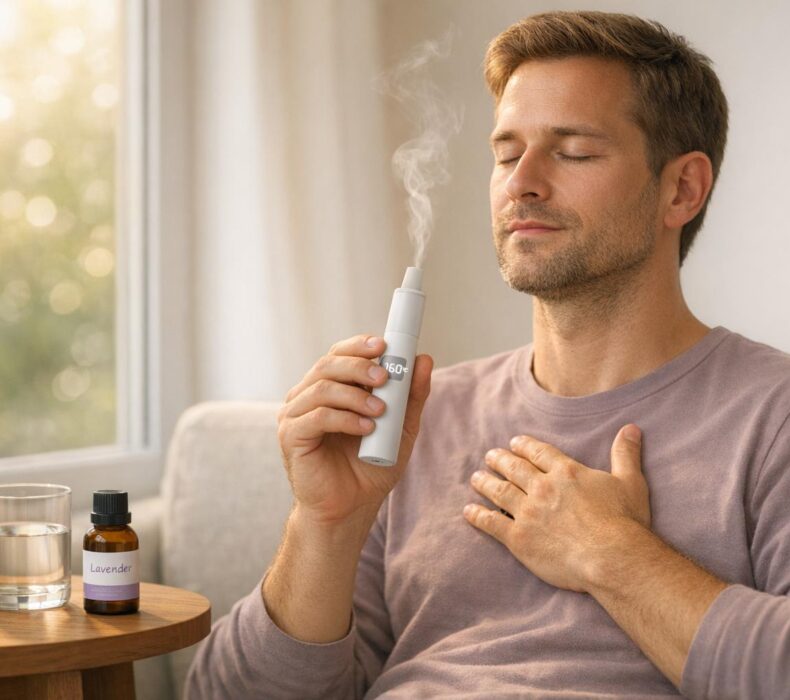
Aromatherapy vapes offer a fast, nicotine-free way to ease stress by delivering essential oil blends directly to your senses. These devices heat oils to release calming compounds that interact with your brain’s emotional centers. Popular oils like lavender, chamomile, and bergamot are known for their relaxing effects, while proper device setup, quality oil selection, and mindful breathing techniques enhance the experience.
Here’s what you need to know:
- Choose calming oils: Lavender reduces anxiety, chamomile promotes relaxation, and bergamot uplifts mood.
- Pick the right device: Look for nicotine-free vapes compatible with essential oils and avoid harmful additives.
- Master the technique: Use gentle inhales and pair with mindful breathing exercises like the 4-4-6 method.
- Safe temperatures: Stick to 257°F–320°F to avoid harmful compounds and preserve oil benefits.
- Routine tips: Use energizing scents in the morning and calming ones before bed to align with your daily needs.
Focus on high-quality oils, proper device care, and consistent use to make aromatherapy vaping a calming ritual.
Selecting Essential Oils for Stress Relief
Best Essential Oils for Reducing Stress
When it comes to managing stress, certain essential oils stand out for their calming properties. Lavender is perhaps the most studied for its anxiety-reducing effects. Its key component, linalool, works by calming neural activity through GABA receptors. In fact, a 2010 study found lavender to be as effective as lorazepam, a commonly prescribed anti-anxiety medication, for treating Generalized Anxiety Disorder. Another study in 2013 demonstrated that applying a 3% lavender oil spray to clothing significantly reduced workplace stress levels.
Chamomile is another excellent choice, known for its sedative qualities that help with sleep and tension. Its active compounds, chamazulene and alpha-bisabolol, have been shown to reduce anxiety significantly. In an eight-week study, 58.1% of participants using chamomile extract reported fewer symptoms of moderate to severe generalized anxiety disorder.
Other helpful oils include peppermint, which contains menthol to ease tension and improve focus, and bergamot, a citrus oil rich in d-limonene that boosts dopamine levels. Bergamot has been shown to enhance positive feelings within just 15 minutes of inhalation in mental health settings. Clary sage is particularly effective for lowering cortisol levels and has antidepressant-like effects. Meanwhile, frankincense offers grounding benefits due to its alpha-pinene content, providing a calming effect similar to walking in a forest.
For mood elevation, sweet orange is a great option with its high d-limonene content (over 90%). Ylang-ylang helps reduce blood pressure and cortisol levels, and sandalwood delivers warm, earthy tones with tension-relieving properties.
Once you’ve identified the oils that work best for you, knowing how to select high-quality options is key.
How to Purchase Quality Essential Oils
The effectiveness of aromatherapy relies heavily on the quality of the oils you use. Start by checking the label for the Latin botanical name (e.g., Lavandula angustifolia for lavender) to ensure you’re getting the real deal. Reliable brands often provide GC/MS (Gas Chromatography-Mass Spectrometry) testing reports, which confirm the oil’s purity and lack of synthetic fillers or contaminants.
"You should also avoid anything that says ‘fragrance’ or ‘perfume.’" – Melissa Young, MD, Functional Medicine Specialist, Cleveland Clinic
The extraction method is another important factor. Look for oils made through steam distillation or cold pressing, as these methods are safer. Avoid "absolutes" for vaping, as they often involve chemical solvents like hexane, which can leave behind residues. Additionally, high-quality oils are typically packaged in dark glass bottles (amber or cobalt blue) to prevent chemical leaching, which can occur with plastic containers.
Price can also be a good indicator of quality. For example, producing one pound of lavender oil requires about 250 pounds of flowers, while lemon oil takes approximately 1,500 lemons per pound. If an oil like sandalwood or rose seems unusually inexpensive, it’s likely been adulterated. Expect to pay $8–$12 for a 10ml bottle of lavender, $7–$10 for peppermint, and $6–$8 for lemon. Brands such as Plant Therapy, Edens Garden, and Rocky Mountain Oils offer GC/MS-tested products at reasonable prices without the high markups often seen with Multi-Level Marketing companies.
Proper storage is essential to maintain the therapeutic properties of your oils. Keep them in a cool, dark place, as heat and UV light can degrade their active compounds, reducing their effectiveness and potentially causing irritation. Citrus oils should be used within one to two years, while herbaceous oils typically last two to three years. Be cautious with oxidized oils, as they can irritate the respiratory system.
Setting Up Your Aromatherapy Vape Device
Device Features and Compatibility
When selecting an aromatherapy vape device, it’s crucial to choose models specifically designed for essential oils. Look for devices clearly marked as nicotine-free and tobacco-free to ensure you’re avoiding any addictive substances. The best options typically use a base of vegetable glycerin combined with natural plant extracts and responsibly sourced essential oils.
Steer clear of devices or blends containing propylene glycol (PG), diacetyl, artificial sweeteners, preservatives, or synthetic dyes, as these can irritate your respiratory system. Instead, focus on brands that emphasize ingredient transparency. Reputable manufacturers provide detailed ingredient lists rather than hiding behind terms like "proprietary blends". Another positive sign is the availability of third-party lab testing results, which verify the purity and safety of the essential oil blends.
The build quality of your device also matters. Well-made devices feature secure seals to prevent leaks and maintain clean airflow for a consistent aromatic experience. You’ll encounter two main types of devices: passive aromatherapy inhalers (non-electronic, using a cotton wick) and portable aromatic diffusers designed explicitly for essential oil inhalation. Personal aromatherapy diffusers typically cost around $30.00, while rechargeable device sets can run closer to $200.00. For in-depth reviews and setup advice, No Nic Vapes is a reliable resource.
Device Setup Instructions
Most modern aromatherapy devices are easy to use, requiring little to no setup. For pod-based rechargeable systems, the process is straightforward: twist the blend pod onto the battery until it clicks into place. Each pod usually lasts for about 200 uses before needing replacement. Avoid refilling standard aromatherapy diffusers with bottled essential oils unless the oils are specifically formulated as compatible e-juice, as this can damage your device.
"The PODs can be changed by twisting them onto or off the diffuser battery." – MONQ
For rechargeable units, place the battery in its charging case or power pack. A full charge typically lasts about a week. Before your first use, take a light, short inhale to gauge your sensitivity to the aroma. Unlike traditional vaping, aromatherapy devices are best used with a mouth-to-nose technique rather than deep lung inhalation, allowing you to fully enjoy the sensory experience. To keep your device in good shape, follow the manufacturer’s cleaning instructions regularly to prevent oil buildup and extend its lifespan. Once your device is ready, you can focus on refining your inhalation technique for the best results.
Proper Inhalation Techniques for Stress Relief
Deep Breathing Methods
The way you breathe while using an aromatherapy device plays a big role in how effective it is for stress relief. Scents are processed by your brain almost instantly because the olfactory bulb connects directly to areas responsible for emotion and memory. However, moderation is key – taking overly strong draws can actually increase stress.
Start with gentle, short inhales to gauge your sensitivity. Softer, controlled breaths tend to create a more calming effect than forceful puffs. A great method to try is the 4-4-6 breathing technique: sit up straight, inhale slowly through your nose for a count of 4 (letting your abdomen expand), hold your breath for another 4 counts, and then exhale gently through your mouth for a count of 6. This kind of diaphragmatic breathing not only calms your body but also enhances your ability to fully experience the essential oil blend. It’s a simple way to combine aromatherapy with mindfulness.
"The breath doesn’t just reflect your state of mind – it shapes it." – Max Lowenstein, Registered Dietitian Nutritionist and Certified Breathwork Instructor
Keep in mind, though, that the effects of aromatherapy may start to fade after 30–60 minutes due to habituation. To make the most of your session, use your device in short intervals and take breaks with fresh air instead of continuous vaping. Pairing these breathing techniques with mindfulness can deepen your sense of relaxation.
Adding Mindfulness to Your Practice
Once you’ve mastered controlled breathing, adding mindfulness can take your stress relief to the next level. Before starting, pause to check in with yourself – what’s your current stress level? Set a clear intention for the session, whether it’s to unwind or simply reset your focus.
As you inhale, pay attention to the sensation of the vapor and notice the subtle layers of the aroma as you exhale. This kind of focus helps clear your mind and shift your mood. Your aromatherapy device can also serve as a helpful tool during particularly stressful moments – like before a big meeting, after a tough conversation, or between demanding tasks – to signal your brain to transition and refocus.
"Any time we want to work with a person’s state of mind, whether it’s calming anxiety or increasing focus, inhalation is the quickest and most effective way to do so." – Hana Tisserand, COO of the Tisserand Institute
sbb-itb-364f168
Temperature Settings and Safety Guidelines
Recommended Temperature Ranges
Getting the temperature right is crucial when vaporizing essential oils. Stick to temperatures between 257°F (125°C) and 320°F (160°C) to safely release the beneficial properties of calming botanicals. For instance, lavender works best between 257°F and 284°F, while herbs like lemon balm and passionflower may need temperatures closer to 320°F. Going beyond 445°F (230°C) can be risky, as it may produce harmful compounds like benzene.
"Vaping at temperatures above 445°F (230°C) may lead to the production of harmful compounds like benzene, so it’s essential to stay within the recommended range." – Robin Marley, VapeExperts
If your device feels hotter than your skin, it might be overheating. To avoid this, let the coil cool by waiting 20 to 30 seconds between puffs. This simple step can help maintain a safe and consistent temperature.
Dilution and Device Maintenance
Beyond temperature, proper dilution and regular upkeep are vital for a safer vaping experience. Never use undiluted essential oils – they’re too concentrated and can lead to sensitization, where your body develops allergic reactions to previously harmless substances. Always choose blends specifically designed for vaping.
"Inhaling VOCs and other abnormal compounds via essential oil vaping can damage your mouth, nose, teeth, and lungs." – Dr. Susan Chiarito, Family Physician
Before your first use, let the oil blend sit in the device for about 10 minutes. This allows the coil to fully saturate, preventing dry hits and ensuring smoother vapor. Regular cleaning is also important – wipe down connection points to remove buildup that could cause overheating or reduce performance. And don’t forget to store your oils properly: keep them in dark glass bottles away from heat and light to avoid oxidation. If an oil smells sour or off, toss it. Oxidized oils can irritate your lungs and compromise your vaping experience.
Adding Aromatherapy Vaping to Your Daily Routine
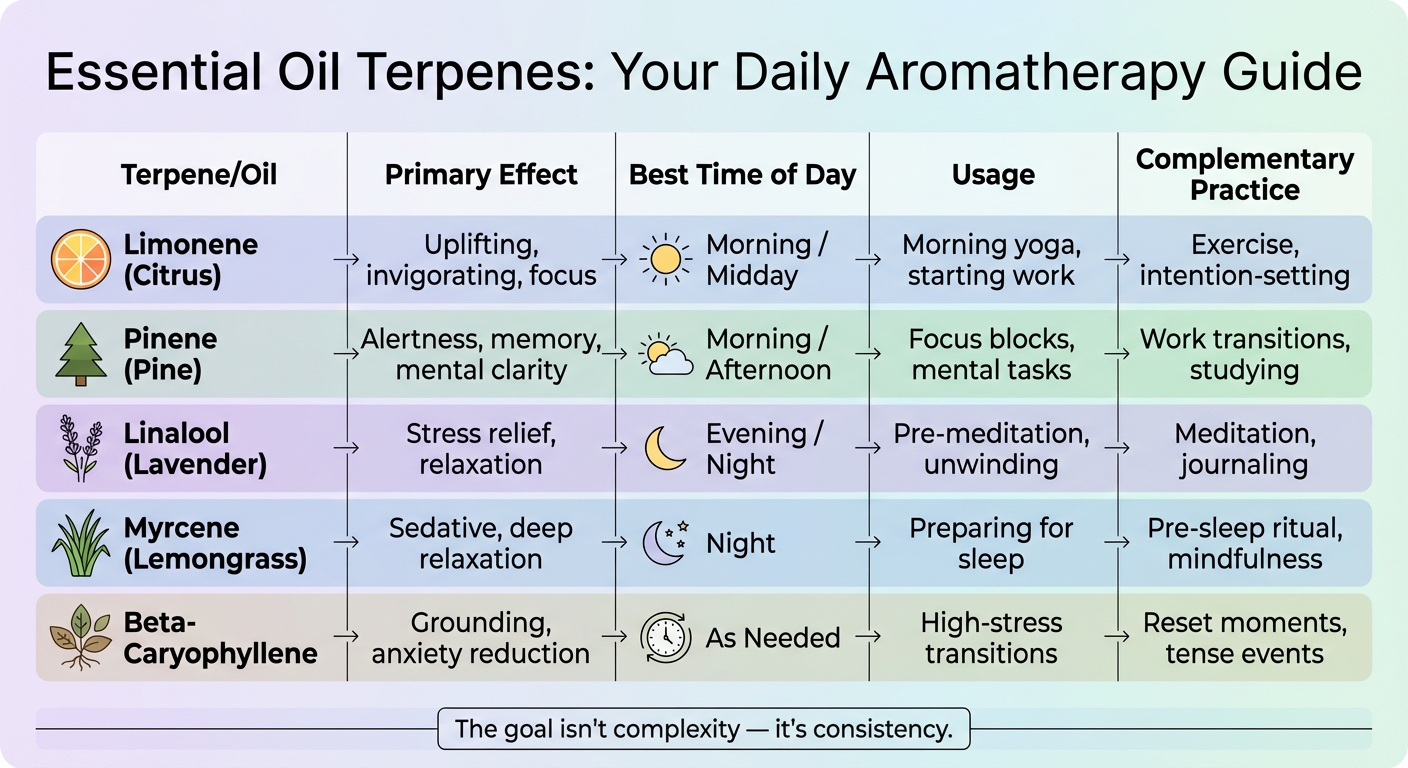
Essential Oil Terpenes Guide: Effects, Best Times, and Complementary Practices
When to Use Aromatherapy Vapes
Once you’ve mastered proper inhalation techniques, incorporating aromatherapy vaping into your daily life can help manage stress and improve your overall well-being. The secret lies in syncing the right scent with the right moment. For example, start your morning with bright, energizing blends containing limonene (citrus) or pinene (pine). These terpenes are known to enhance alertness and mental clarity, making them ideal for activities like yoga or setting your daily intentions.
Midday can be a good time to reset, especially after a stressful meeting or task. Use your aromatherapy vape to regain focus and composure. In the evening, calming scents like linalool (lavender) or myrcene (lemongrass) can help signal your body that it’s time to relax. Try using these blends 30 to 60 minutes before bed to prepare for a restful night’s sleep.
"One breath can become a reset." – MONQ
For quick moments of relief, the 3-Breath Ritual is a simple yet effective technique. Take three slow, steady breaths using the retronasal method: inhale through your mouth for 2 to 3 seconds, then exhale through your nose to fully experience the aroma. Pair this with a brief intention, like “I choose calm,” to enhance the effect.
Below is a guide to help you match specific terpenes with the best times and practices.
Oil Effects and Routine Planning Guide
| Terpene/Oil | Primary Effect | Best Time of Day | Usage | Complementary Practice |
|---|---|---|---|---|
| Limonene (Citrus) | Uplifting, invigorating, focus | Morning / Midday | Morning yoga, starting work | Exercise, intention-setting |
| Pinene (Pine) | Alertness, memory, mental clarity | Morning / Afternoon | Focus blocks, mental tasks | Work transitions, studying |
| Linalool (Lavender) | Stress relief, relaxation | Evening / Night | Pre-meditation, unwinding | Meditation, journaling |
| Myrcene (Lemongrass) | Sedative, deep relaxation | Night | Preparing for sleep | Pre-sleep ritual, mindfulness |
| Beta-Caryophyllene | Grounding, anxiety reduction | As Needed | High-stress transitions | Reset moments, tense events |
By consistently pairing specific scents with daily activities, you can train your brain to associate those aromas with relaxation or focus. If you’re new to aromatherapy or sensitive to scents, start with small draws and gradually adjust. Try using invigorating blends during morning exercise or work sessions, and calming blends for winding down with a book or meditation.
"The goal isn’t complexity – it’s consistency." – Wyndmere Naturals
Conclusion
Aromatherapy vaping offers a nicotine-free and tobacco-free way to manage stress, relying on intentional breathing and natural plant compounds. The real benefit lies in the ritual itself: the hand-to-mouth motion, the pause, and the slow exhale – all of which signal your nervous system to relax and reset. Whether you’re using an essential oil blend to improve focus during the day or to wind down at night, the key is consistency.
To make the most of this practice, focus on combining effective device use, high-quality essential oils, and mindful breathing. Start with gentle draws to gauge your sensitivity and build a routine that aligns with your stress triggers. When relaxation is your goal, softer draws with calm, steady exhales are often more effective than deep, intense inhalations. Always opt for products with transparent ingredient lists and a 0% nicotine guarantee for an authentic aromatherapy experience.
"You’re not buying a complicated solution. You’re buying a small ritual that’s easy to repeat – one you can reach for before stress gets loud." – MONQ
For those new to aromatherapy vaping or looking for additional wellness tools, No Nic Vapes offers reviews and guides on vitamin, melatonin, and herbal vapes. Visit their site to explore more insights and product recommendations that can enhance your wellness journey.
FAQs
Are aromatherapy vapes safe for your lungs?
Aromatherapy vapes might irritate and inflame the lungs, which could lead to health risks. Even though they might appear to be a safer alternative to traditional vaping, they are not risk-free when it comes to lung health. If you have any concerns, it’s best to consult a healthcare professional.
Can I use regular essential oils in an aromatherapy vape?
It’s not advisable to use regular essential oils in an aromatherapy vape. The American Lung Association warns that directly inhaling essential oils into the lungs can lead to health concerns. Moreover, most vape devices are not built to handle essential oils safely. To minimize risks, stick to devices specifically designed for aromatherapy and follow recommendations from reliable sources.
How often should I use an aromatherapy vape for stress?
There isn’t a set rule for how often you should use aromatherapy vapes for stress relief. The key is moderation and listening to your body. If you start to feel any discomfort or experience respiratory problems, it’s best to cut back or stop using them entirely. Always stick to the manufacturer’s instructions for your device and oils, and if you’re unsure about frequent use, consider reaching out to a healthcare professional for advice.