
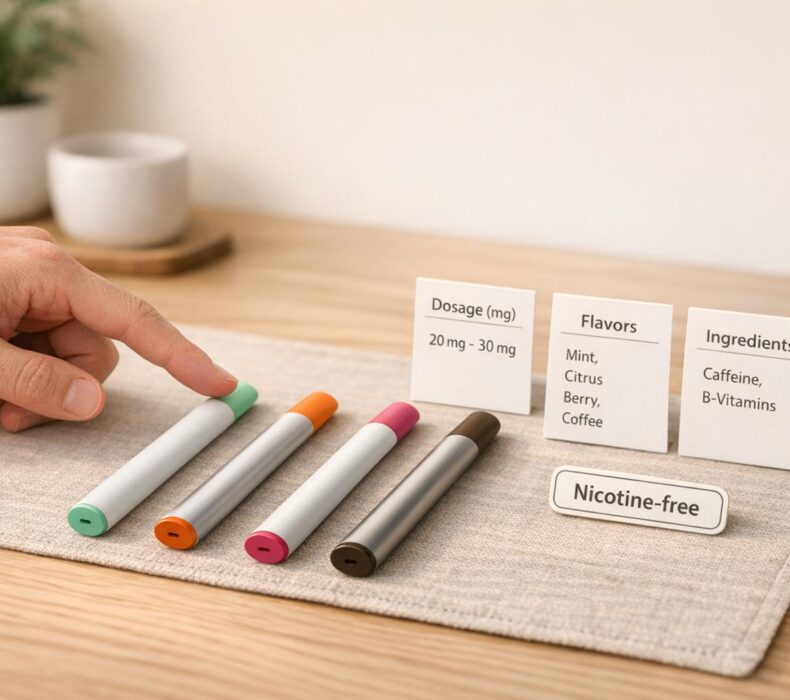
Caffeine vapes are a fast, portable alternative to coffee or energy drinks, delivering caffeine directly through inhalation. They provide a quick energy boost within 10–15 minutes, with effects lasting 1–3 hours, depending on your metabolism. These devices are sugar-free, calorie-free, and discreet, making them a convenient option for on-the-go energy. Here’s a quick guide to help you pick the right one:
- Dosage: Start with 2–3 puffs to test your sensitivity. Most devices deliver 0.2–1.5 mg of caffeine per 10 puffs. Keep your total daily caffeine intake under 400 mg.
- Flavor: Choose from coffee-based, fruit, mint, or specialty blends with added ingredients like L-Theanine for smoother effects.
- Ingredients: Look for nicotine-free products with food-grade components. Avoid harmful additives like diacetyl or vitamin E acetate.
- Device Type: Decide between disposable vapes (easy to use, $15–$25) or reusable systems (higher upfront cost but long-term savings).
- Reviews and Safety: Check user feedback and third-party lab reports to ensure quality and transparency.
For a stronger caffeine hit, consider brands like HELO Plus (1.3 mg per 10 puffs, 800 puffs total). If you prefer calming ingredients, options like LUVV WAKE or HealthVape ENERGY include L-Theanine and Vitamin B12. Always verify ingredient labels and lab results to make an informed choice.
Step 1: Assess Your Caffeine Requirements
Determine Your Dosage
A standard cup of coffee contains about 90 mg of caffeine, while a caffeine vape delivers just 0.1–1.5 mg per 10 puffs. However, because the caffeine is absorbed directly through the lungs, even these smaller doses can feel nearly as effective as your morning coffee.
If you’re new to caffeine vaping, start with 2–3 puffs to gauge your sensitivity before trying a full 10-puff session. Keep in mind that if you’re still drinking coffee or tea throughout the day, you’ll need to account for all sources of caffeine. For healthy adults, the recommended daily limit is 400 mg of caffeine from all sources. Think of the vape as a supplement to your routine, not a replacement.
Pay attention to how your body reacts – jitters, a racing heart, or restlessness can signal you’ve had too much. Since the effects kick in fairly quickly (usually within 10–15 minutes), it’s easy to overdo it without realizing. Tracking your puffs during the first week can help you find the right balance.
Once you’ve got your dosage in check, consider how your daily routine plays into your caffeine needs.
Consider Your Daily Routine
Your schedule plays a big role in determining how and when to use a caffeine vape. For professionals or students, the portability and discretion of vaping make it easy to grab a quick energy boost between meetings or study sessions. Athletes may find it useful as a pre-workout pick-me-up, ideally timed about 10–15 minutes before exercise.
To maintain steady energy levels, use the vape during natural energy dips – like first thing in the morning, during the mid-afternoon lull (usually between 2:00 PM and 4:00 PM), or before a workout. However, avoid using it within 4 to 6 hours of bedtime, as even small amounts of caffeine can interfere with sleep.
If you have health concerns like heart conditions, high blood pressure, or caffeine sensitivity, consult your healthcare provider before trying a caffeine vape. Pregnant or breastfeeding women should also seek medical advice before use.
sbb-itb-364f168
Step 2: Select Your Flavor
Once you’ve figured out your caffeine needs, it’s time to pick a flavor that enhances your vaping experience. The right flavor can make all the difference, turning your device into a daily favorite or just an occasional option.
Common Flavor Options
With your dosage and routine in place, choosing a flavor that matches your preferences can elevate your experience. Caffeine vapes generally fall into four main flavor categories: coffee-based, fruit, mint/menthol, and specialty blends.
Coffee lovers can enjoy options like Mocha, Cappuccino, or Espresso, which bring the comforting aroma of a freshly brewed cup. If you’re after something lighter, fruit flavors are a great pick. Strawberry alone accounts for over 18% of global fruit-flavored vape sales, with other popular choices including Watermelon Ice, Pink Lemonade, and Citrus.
For a cooling and refreshing option, mint and menthol flavors – like Arctic Mint, Peppermint, or various "Ice" blends – engage TRPM8 receptors, creating a crisp, cooling sensation. Think about when you’ll be using your vape: coffee or citrus flavors are perfect for a morning boost, while mint or fruity options are great for an afternoon energy lift or pre-workout pick-me-up. If you plan to use your vape regularly throughout the day, consider rotating between two profiles – perhaps a fruit and a mint flavor – to avoid flavor fatigue.
Explore Specialty Blends
If you’re looking for something beyond standard flavors, specialty blends can offer extra perks. These blends combine caffeine with functional ingredients for added benefits. For instance, some include L-Theanine, an amino acid known for reducing caffeine jitters while improving focus. Others might feature Vitamin B12 to support energy metabolism or Guarana for an extra energy kick.
"L-theanine is an amino acid that helps you focus while counteracting the jitters you might experience from caffeine consumption." – MELO Labs, Inc.
Specialty blends often mimic popular beverages, such as "Caramel Coffee" (inspired by macchiatos) or "Ice Coffee" (a mix of roasted coffee and menthol). Then there are nostalgic flavors like Pink Slush or Tropic Slush, which bring back memories of frozen treats from childhood. If you’re sensitive to caffeine, look for blends that include L-Theanine – it helps smooth out the energy boost and minimizes overstimulation.
Step 3: Review Dosage and Ingredients
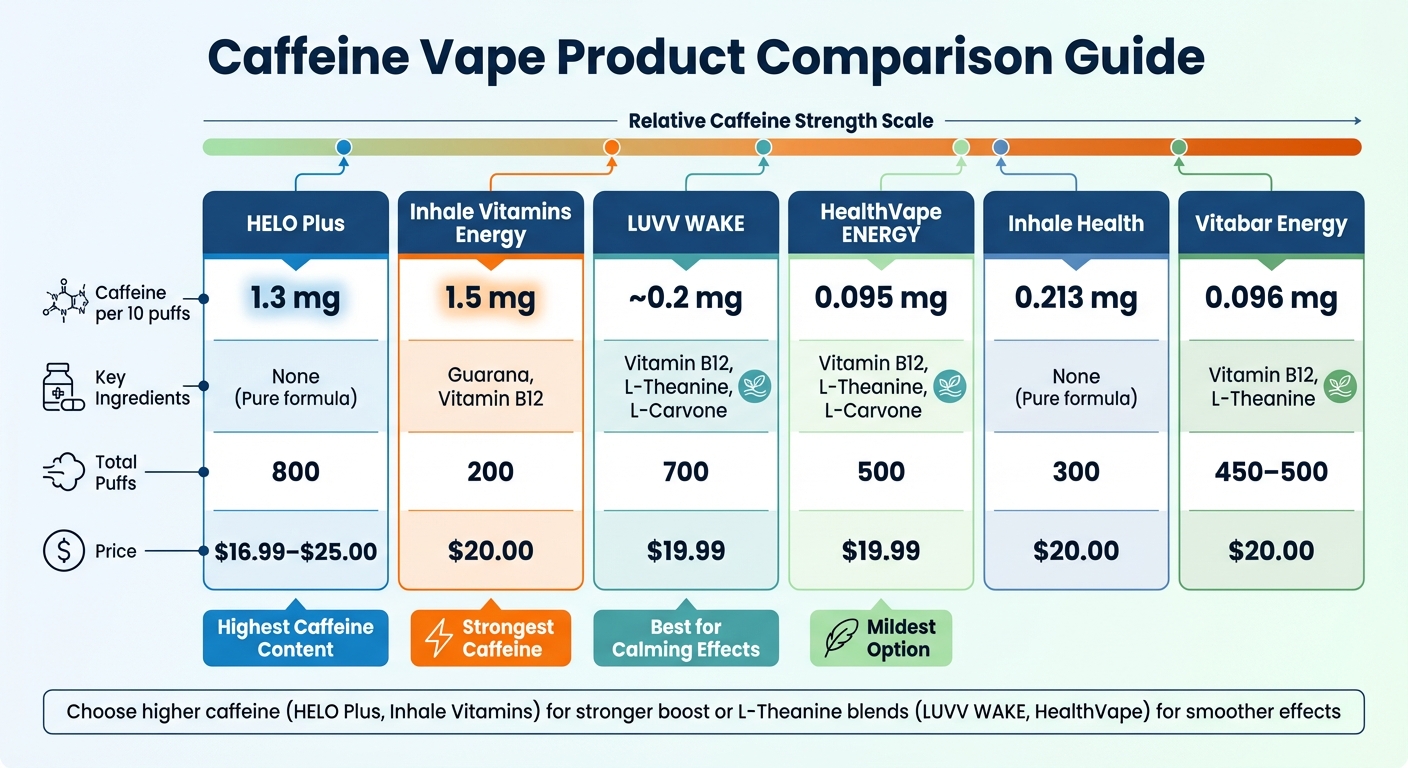
Caffeine Vape Product Comparison: Dosage, Ingredients, and Price Guide
Once you’ve chosen your flavor and dosage, the next step is to carefully examine the label for caffeine content and other ingredients. This ensures you’re making an informed choice while minimizing potential risks.
Read Caffeine Per Puff Information
Caffeine vape labels can differ significantly, so it’s essential to interpret them correctly. Many brands define a serving as 10 puffs, but the actual caffeine content per serving varies. For instance:
- HELO Air: 1.3 mg per 10 puffs
- Inhale Vitamins Energy: 1.5 mg per 10 puffs
- HealthVape: 95 mcg (0.095 mg) per 10 puffs
Some brands, like Solstice, provide caffeine content for the entire device. Solstice contains 40 mg of caffeine across 400 puffs, which breaks down to about 1.0 mg per 10 puffs.
Pay attention to whether the label specifies caffeine per puff, per serving, or for the whole device. Also, note that 1,000 micrograms (mcg) equal 1 milligram (mg), so double-check measurements to avoid confusion.
Look for Additional Ingredients
Caffeine vapes often include other components that can enhance their effects. Here are some common additions:
- Vitamin B12: Supports energy metabolism.
- L-Theanine: Helps reduce caffeine-related jitters.
- Guarana: Provides a natural energy boost.
The carrier liquid is another key factor. Most vapes use vegetable glycerin (VG), propylene glycol (PG), or a mix of both. Some brands, like HELO Air and Inhale Health, use organic VG and natural flavors for a gentler formula. Others, such as Vitabar Energy, include PG, which may feel harsher on the throat for some users.
Safety is critical. Make sure the product is nicotine-free and doesn’t contain harmful additives like diacetyl (linked to "popcorn lung"), vitamin E acetate (associated with lung injuries), or pulegone (a carcinogen). Look for vapes tested in ISO-certified labs or through third-party testing for heavy metals and aldehydes.
"The GRAS designation means something is safe to consume through eating… but that’s very different from heating a substance and inhaling the resulting aerosol."
- Bonnie Halpern-Felsher, PhD, Professor of Pediatrics, Stanford Medicine
Product Comparison Table
Here’s a side-by-side look at popular caffeine vape options, highlighting their caffeine content, additional ingredients, puff count, and price:
| Product | Caffeine per 10 Puffs | Key Additional Ingredients | Total Puff Count | Price |
|---|---|---|---|---|
| HELO Plus | 1.3 mg | None (Pure formula) | 800 | $16.99–$25.00 |
| Inhale Vitamins Energy | 1.5 mg | Guarana, Vitamin B12 | 200 | $20.00 |
| LUVV WAKE | ~0.2 mg | Vitamin B12, L-Theanine, L-Carvone | 700 | $19.99 |
| HealthVape ENERGY | 0.095 mg | Vitamin B12, L-Theanine, L-Carvone | 500 | $19.99 |
| Inhale Health | 0.213 mg | None (Pure formula) | 300 | $20.00 |
| Vitabar Energy | 0.096 mg | Vitamin B12, L-Theanine | 450–500 | $20.00 |
This table can help you weigh your options. If you need a stronger caffeine kick, consider products like HELO Plus or Inhale Vitamins Energy. For a milder experience with added calming ingredients like L-Theanine, LUVV WAKE or HealthVape ENERGY might be a better fit.
Step 4: Choose Your Device Type
When selecting a device, think about how it fits into your daily life. The right choice should feel natural – something you’ll use regularly, not something that ends up forgotten in a drawer.
Disposable vs. Reusable Options
Disposable caffeine vapes are perfect for those who want a no-fuss experience. These devices come pre-filled and pre-charged, ready to use straight out of the box. They’re especially handy for beginners, travelers, or anyone with a packed schedule. Once the battery or e-liquid runs out, you simply toss them away.
Reusable pod systems, on the other hand, require a bit more effort. You’ll need to refill them and occasionally replace the coil or pod. While the initial cost is higher – typically $25–$50 compared to $10–$20 for disposables – they’re more economical over time if you use them regularly.
A middle ground is found in pod-swap hybrid systems, which combine a rechargeable base with replaceable pre-filled pods. These devices are gaining popularity as they balance convenience with a more sustainable approach.
"Disposable vapes are great for testing out the water, but longer term they’re too expensive, too restrictive, and are terrible for the environment." – Drake Equation, Author
Once you’ve decided on the type, it’s time to think about size and battery life.
Size and Battery Life
The size of the device and its battery capacity can make or break how well it fits into your routine. Smaller devices are lightweight and easy to carry, but they may need frequent recharging. Larger ones last longer but can be bulkier.
- Small batteries (about 350 mAh): Compact and portable, these typically offer 120–200 puffs on low power settings.
- Mid-sized batteries (650 mAh): A good balance of portability and performance, providing 250–350 puffs.
- Large batteries (900 mAh or more): These can last several days, delivering 350–500 puffs, but they’re less pocket-friendly.
For occasional use, like taking 5–10 puffs for a quick caffeine boost, even a smaller device with around 400 total puffs can work well for daily needs.
Battery lifespan is another factor to consider. Most small lithium-ion batteries last for 300–500 full charge cycles before their capacity starts to drop noticeably[33,34]. A decline of 10–30% in performance signals that the battery is nearing the end of its life. To extend battery life, store your device in a cool, dry place and avoid exposing it to heat, which can speed up wear and tear[33,35].
Modern disposables in 2026 offer impressive performance, delivering anywhere from 25,000 to 100,000 puffs per device. Charging times vary, ranging from 45–90 minutes for smaller batteries (350 mAh) to up to 4 hours for larger ones (900 mAh). Many high-capacity models now feature USB-C fast-charging ports, reducing downtime[29,31]. However, keep in mind that cold weather can reduce battery efficiency by 20–30%, so you may need to recharge more often if you’re spending time outdoors in winter.
| Battery Capacity | Portability Level | Best For | Est. Puffs (Mid-Power) |
|---|---|---|---|
| 350 mAh | Ultra-Portable | Light users / Short trips | 70–140 |
| 650 mAh | Balanced | Daily commuters | 140–250 |
| 900 mAh | Larger | Power users / Road trips | 200–350 |
Step 5: Research Reviews and Safety
Before you buy, take time to understand exactly what you’re purchasing. The caffeine vape market is expanding fast, but not every product meets reliable standards. Doing your homework upfront can save you money – and help you avoid inhaling something questionable.
Read User Feedback
User reviews can reveal details that marketing materials might gloss over. Focus on brands with a lot of verified reviews. For instance, MELO Labs has earned 6,724 reviews, with 80% of them being 5-star ratings as of April 2026. Similarly, Cloudy Caffeine Diffusers boast over 20,000 reviews. A high number of reviews suggests consistent performance, not just hype from early adopters.
Look deeper into the reviews for specific insights. Users often share how quickly they feel the caffeine effects – usually within 10–15 minutes. They also comment on whether the flavor holds up over the device’s lifespan and the quality of the "throat hit". Some reviews mention that certain flavors, especially coffee-based ones, can get overly sweet or lose their appeal as the device nears the end of its life.
Once you’ve explored user experiences, check if independent lab tests back up the product’s safety and ingredient claims.
Confirm Nicotine-Free Status and Ingredient Quality
Don’t just rely on reviews – make sure the product’s claims hold up. Even if a product is labeled nicotine-free, it might still contain synthetic nicotine analogs like 6-methyl nicotine or nicotinamide. A study found that 6 out of 8 products listing nicotinamide also contained undisclosed 6-methyl nicotine. Sven Eric Jordt, a pharmacology professor at Duke University, explains:
"These products bypass regulation".
To ensure you’re getting a truly nicotine-free product, look for transparency. Third-party lab reports (COAs) should confirm the absence of nicotine, heavy metals, pesticides, and harmful additives like Vitamin E acetate and diacetyl. Many brands now include QR codes on packaging that link to batch-specific lab results. Always double-check that the batch ID on the COA matches the one on your device.
Be sure to review the ingredient list as well. High-quality caffeine vapes often use USP-grade or food-grade ingredients, typically including caffeine, organic vegetable glycerin, and natural flavors. Steer clear of products with vague ingredient descriptions or unclear sourcing. And keep in mind: just because an ingredient is labeled "Generally Recognized as Safe" (GRAS) for eating doesn’t mean it’s safe for inhalation. Dr. Bonnie Halpern-Felsher from Stanford Medicine puts it this way:
"The GRAS designation means something is safe to consume through eating, or as a salve on the skin, but that’s very different from heating a substance and inhaling the resulting aerosol".
Conclusion
Selecting the right caffeine vape means considering your caffeine requirements, preferred flavors, ingredient quality, device functionality, and safety. Since inhaled caffeine typically takes effect within 10–15 minutes, start with 2–3 puffs to test your tolerance.
Pay close attention to ingredient quality. Opt for products made with food-grade components like organic vegetable glycerin and natural flavors, while steering clear of harmful additives such as diacetyl, vitamin E acetate, and propylene glycol. Double-check that the product is genuinely nicotine-free by reviewing third-party lab reports (COAs).
Once you’ve ensured ingredient safety, choose a device that fits your lifestyle. High-capacity options like the HELO Plus, which offers up to 800 puffs for around $25.00, are great for consistent energy throughout the day. On the other hand, smaller disposable models starting at $15.00 are ideal for occasional use or travel. Be mindful of your total daily caffeine consumption, keeping it under the recommended limit of 400 mg per day for healthy adults.
As this market expands, reading verified reviews and checking ingredient details can help you find a product that balances energy needs with overall well-being. For more in-depth reviews and tips on nicotine-free vaping, check out No Nic Vapes (https://nonicvapes.com).
FAQs
How many puffs equal a cup of coffee?
On average, taking around 10 puffs from a standard caffeine vape delivers about the same amount of caffeine as a single cup of coffee. However, this can vary depending on the specific dosage and concentration of the vape you’re using.
How can I tell if a caffeine vape is truly nicotine-free?
To ensure a caffeine vape is free from nicotine, start by checking the packaging or product description for labels that explicitly say "nicotine-free." Reputable brands often make this clear. Additionally, review the ingredient list for any mention of nicotine. For extra assurance, look for third-party testing or lab reports that confirm the absence of nicotine in the product. Always read labels thoroughly and stick to trusted sellers who clearly state their products do not contain nicotine.
What should I look for in a third-party lab report (COA)?
When you’re looking at a third-party lab report (COA) for a caffeine vape, focus on three key areas: potency, purity, and safety. The report should confirm the caffeine content, ensure it meets legal THC limits (if it’s a hemp-derived product), and check for harmful contaminants like pesticides, heavy metals, and residual solvents. A detailed COA provides clarity by verifying the ingredients and confirming that the product’s potency aligns with what’s advertised.