
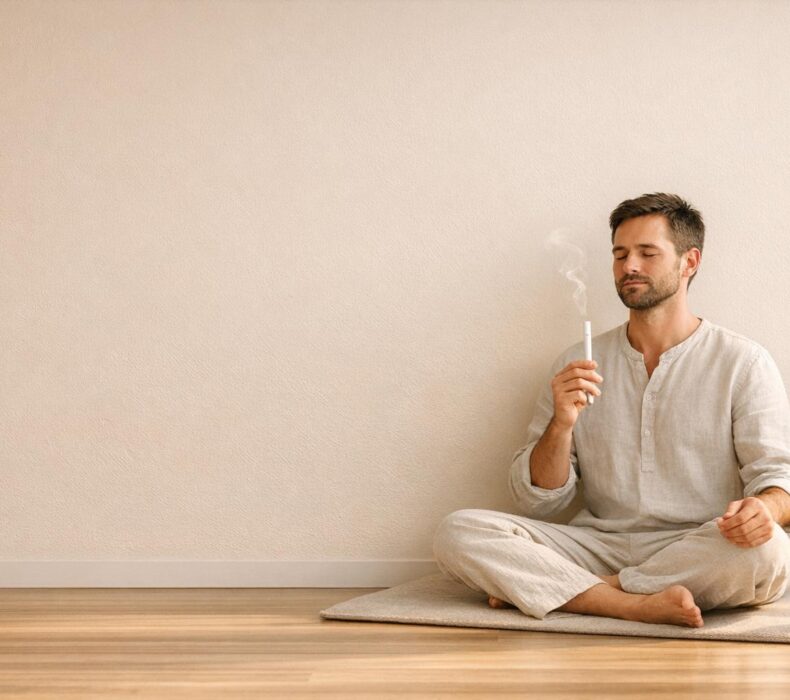
Aromatherapy vaping combines the calming effects of essential oils with deep breathing to enhance meditation. These nicotine-free devices use low-heat technology to release terpenes – natural compounds from plants – into an inhalable mist. This method engages your senses and helps relax the mind, making it easier to focus and stay present during meditation.
Key Takeaways:
- How It Works: Inhaling terpenes stimulates the limbic system, which manages emotions and stress. This mirrors meditation’s deep breathing benefits.
- Popular Terpenes for Relaxation: Lavender’s linalool for stress relief, citrus-based limonene for focus, and beta-caryophyllene for calm without drowsiness.
- Choosing a Device: Opt for the best essential oil vapes designed for nicotine-free use, such as disposable or rechargeable models.
- Building a Routine: Pair vaping with rhythmic breathing in a quiet space. Use short, focused sessions (10–15 minutes) to avoid sensory adaptation.
Aromatherapy vaping offers a portable, sensory-based way to deepen your mindfulness practice. By selecting the right oils and devices, you can align your routine with your relaxation or focus goals.
Unplug | Aromatherapy Meditation to Shift and Uplift | Jamie Wozny
sbb-itb-364f168
How Essential Oils Support Relaxation
Essential oils help promote relaxation by interacting with nasal receptors and entering the bloodstream. When you inhale their aromatic molecules, they bind to receptors in your nasal cavity and send signals directly to the limbic system – often referred to as the brain’s emotional center. When vaping, the vaporized oils reach the alveolar sacs in the lungs, where they are absorbed into the bloodstream for quicker results. Because these molecules are lipophilic (fat-soluble), they can cross the blood-brain barrier, allowing for faster effects compared to diffusion. This combination of actions highlights the unique benefits of specific terpenes.
Terpenes That Promote Relaxation
Linalool, a key component in lavender, is one of the most researched terpenes for stress relief. It supports relaxation by modulating GABA receptors, which are also targeted by many anti-anxiety medications. Studies on animal models have shown that linalool can extend sleep duration by 2.6 times while also lowering body temperature and reducing spontaneous movement.
Limonene, derived from citrus rinds, works by activating the limbic system, which helps elevate mood and improve focus. This makes it a great option for morning meditation, especially when you want to feel both energized and grounded. Beta-caryophyllene, found in cloves and black pepper, interacts with CB2 receptors, offering a calming effect without causing drowsiness – perfect for managing daytime stress.
In February 2026, Terpene Belt Farms introduced their "Citrus #144" blend, which combines myrcene, limonene, and beta-caryophyllene. This formulation is designed to promote relaxation while maintaining mental clarity.
The effects of these terpenes are closely tied to the intricate workings of the olfactory system.
The Science of Aromatherapy
The human olfactory system is capable of identifying an incredible variety of chemical compounds. When you inhale terpenes, they can suppress the sympathetic nervous system – responsible for the "fight or flight" response – leading to lower blood pressure, a slower heart rate, and more controlled breathing during stressful moments. These physiological changes create an ideal state for meditation, helping the body shift from tension to calm.
"The olfactory system uniquely links directly to the limbic system. Thus, olfactory stimuli can have a strong effect on mood." – Timothy K H Fung, Department of Rehabilitation Sciences, The Hong Kong Polytechnic University
Understanding these processes can enhance your mindful vaping experience, allowing you to choose terpene profiles that align with your meditation goals and refine your practice over time.
Choosing an Aromatherapy Vape for Meditation
The right aromatherapy vape can enhance your meditation experience, but it all starts with choosing the right oils. High-quality, natural, organic, and therapeutic-grade oils are essential for effective results. It’s equally important to ensure your device is specifically designed for essential oils and is clearly labeled as nicotine- and tobacco-free. Steer clear of low-quality products that lack transparency about their ingredients, as these can compromise your experience. The vape you choose directly impacts how well the essential oils support your relaxation and meditation.
When selecting a device, consider your personal preferences. Devices like dry vapes and oil vaporizers work well for essential oil delivery, whether you prefer a simple cotton-wick inhaler or a portable device with built-in heating. Disposable options, such as MONQ, typically provide 200 to 250 breaths per unit and cost around $20–$30. Rechargeable models offer the advantage of replaceable pods, though they might be slightly bulkier.
Common Essential Oil Blends
Your choice of essential oil blend should align with your meditation goals. For relaxation, blends containing lavender, rose, frankincense, and eucalyptus are known to help reduce stress and promote a sense of calm. If you’re aiming for better focus and mental clarity, oils like peppermint, lemon, lime, and tangerine can refresh your mood and combat brain fog.
In February 2026, a reviewer from No Nic Vapes tested the MONQ Ocean portable diffuser to address "afternoon brain fog" while working remotely. They followed a daily ritual of taking five to six slow breaths at 2:00 PM, reporting that the eucalyptus and lime blend created a cooling effect, cleared their airways, and improved focus within minutes. The device, free of nicotine and propylene glycol, lasted about two to three weeks with moderate daily use. For those seeking better sleep, lavender-based oils or melatonin-infused vapes are excellent options.
"The key to distinguish a good quality oil is to check its ingredients." – Julie Matthews
Before fully incorporating aromatherapy vaping into your meditation practice, test your sensitivity with a few gentle draws. Use the "mouth-to-nose" inhalation method – inhale through your mouth and exhale through your nose – to maximize the aroma’s reach and enhance the experience. Thoughtfully selecting the right blends can help you create a personalized and effective meditation routine.
Nicotine-Free Options from No Nic Vapes

If you’re looking for guidance on selecting a quality vape, No Nic Vapes offers in-depth reviews and educational resources. Their platform specializes in herbal diffusers and essential oil vapes tailored to wellness and meditation. You’ll find detailed product comparisons, ingredient transparency insights, and advice on choosing devices that align with specific goals, whether you’re seeking grounding, mental clarity, or stress relief. These resources can help you find high-quality, nicotine-free options that suit both your practice and your budget.
Building an Aromatherapy Vaping Meditation Routine
Once you’ve chosen the right aromatherapy vape, the next step is creating a routine that helps your mind recognize it’s time to relax. A consistent ritual acts as a signal to your brain, making it easier to transition into meditation. Start by designating a quiet, distraction-free space for your sessions. This physical environment serves as a cue to slow down. Choose a device with terpenes that align with your meditation goals – Linalool (Lavender) for relaxation, Limonene (Citrus) for focus and mood enhancement, or Myrcene for a calming, sedative quality. Let the scent match your needs in the moment.
Incorporate rhythmic and gentle breathing into your practice. Using the retronasal breathing technique – inhaling through your mouth and exhaling through your nose – can enhance the aromatic experience without requiring deep lung inhalation. By focusing on the scent and your breath, you stay grounded in the present.
"If your goal is calm, your breath matters more than intensity. Softer usually works better." – MONQ
Keep your sessions short and purposeful rather than prolonged. Prolonged exposure to the same scent can lead to sensory adaptation, reducing its effectiveness. Instead, aim for brief, focused sessions lasting about 10–15 minutes. Repeating this ritual consistently will help train your brain to enter a meditative state more easily over time.
Step-by-Step Instructions
Start by preparing your space – dim the lights, silence your phone, and find a comfortable seated position. Hold your aromatherapy vape and take a moment to set an intention for your session. Inhale gently for 2–3 seconds through your mouth, then exhale slowly through your nose. Pay attention to the sensations: the cool vapor, the distinct aromatic notes, and the rhythm of your breath.
Continue this breathing pattern for 10–15 minutes, treating each breath as a moment to reset. Sync your inhalations and exhalations with the device’s vapor production to keep your attention anchored. If your mind starts to wander, gently guide your focus back to the scent and your breathing. After your session, consider journaling briefly about your experience. Write down which terpene you used, how you felt, and any insights you gained. Reflecting in this way can help you fine-tune your routine over time.
Ways to Improve Your Routine
Once your basic routine is established, you can add elements to enhance your practice. Incorporate complementary sensory experiences to deepen relaxation. Soft ambient music or nature sounds can make your meditation more immersive. Dim lighting or candlelight provides a visual signal for relaxation, and guided meditation audio can be particularly helpful when you’re just starting out.
Focus on slow, steady exhalations rather than intense inhalations. A calmer breath pattern typically promotes better relaxation. Store your device in a cool, dry place away from direct sunlight to preserve the quality of the essential oils. Stick to consistent cues, timing, and breathing patterns. Over time, this repetition strengthens the relaxation benefits and helps your brain transition into a meditative state more quickly.
"One breath can become a reset." – MONQ
Terpene Blends for Different Meditation Goals
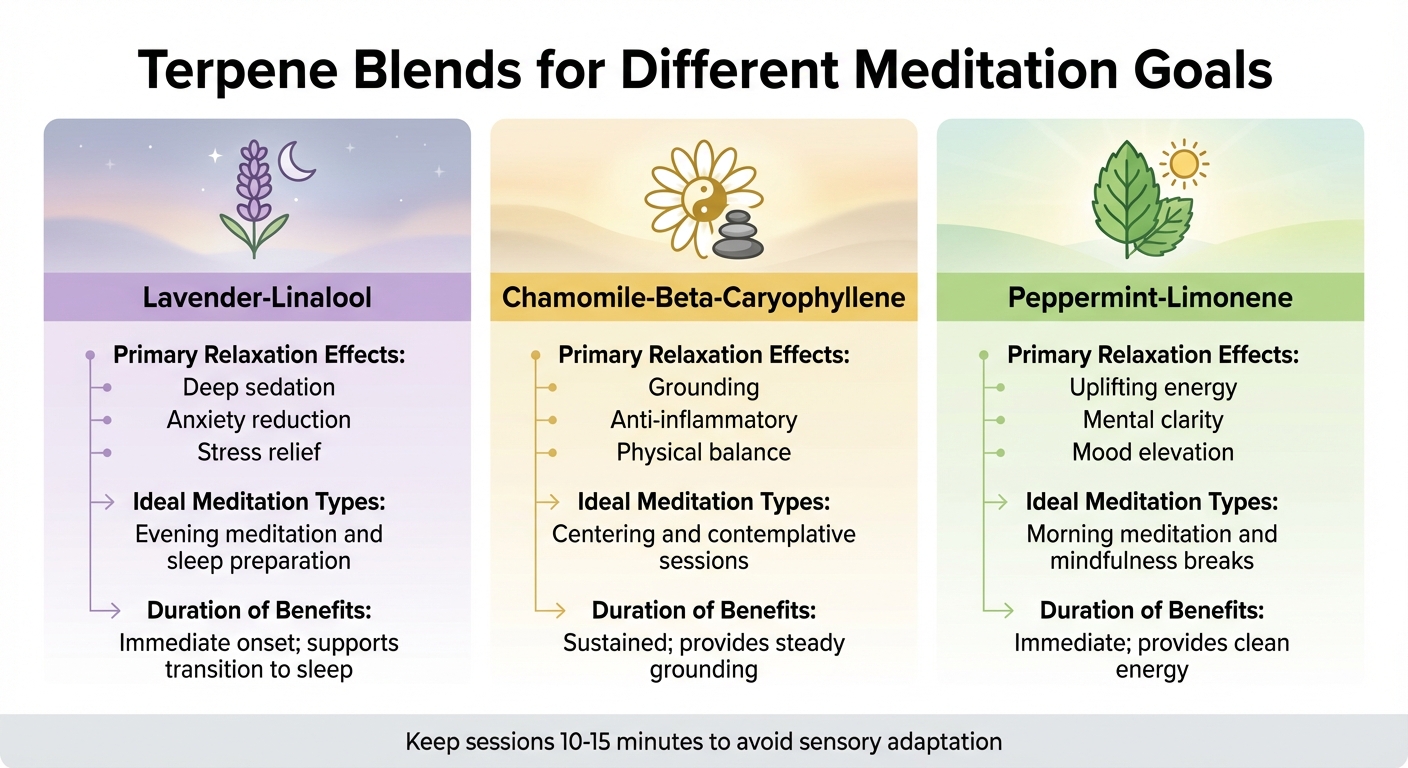
Terpene Benefits for Meditation: Comparison Guide
Building on the connection between essential oils and relaxation, choosing the right terpene blend can align your meditation sessions with specific goals. Morning meditations often emphasize focus and energy, while evening practices aim to promote relaxation and prepare the body for rest. By selecting a terpene blend that matches your intention, you can enhance the depth and effectiveness of your practice. Each terpene works uniquely, influencing emotions and memory pathways.
For evening meditations, Lavender-Linalool is a standout choice. It interacts with GABA receptors, promoting deep relaxation and easing stress. If your goal is to feel grounded during contemplative sessions, Chamomile-Beta-Caryophyllene can help. By activating CB2 receptors, it reduces anxiety and alleviates physical tension, fostering a sense of balance. On the other hand, morning meditations can benefit from Peppermint-Limonene, which enhances mood and mental clarity by increasing serotonin and dopamine levels. These carefully chosen blends make it possible to create a meditation practice tailored to the time of day and your specific needs.
"Linalool… is the quintessential choice for stress relief and relaxation. It’s perfect for unwinding after a long day or preparing the mind for meditation and sleep." – Vaping Hardware
Using aromatherapy vaping for terpene delivery allows for quicker effects, as terpenes are absorbed rapidly through the lungs and into the bloodstream. This method is more direct than traditional diffusers, making it easier to experience the benefits during meditation. To maintain effectiveness and avoid sensory adaptation, keep your vaping sessions short and adjust your blends to suit the time of day. Energizing scents like peppermint or citrus are ideal for mornings, while calming aromas such as lavender or cedarwood work well in the evening.
Terpene Benefits Comparison
| Terpene Blend | Primary Relaxation Effects | Ideal Meditation Types | Duration of Benefits |
|---|---|---|---|
| Lavender-Linalool | Deep sedation, anxiety reduction, stress relief | Evening meditation and sleep preparation | Immediate onset; supports transition to sleep |
| Chamomile-Beta-Caryophyllene | Grounding, anti-inflammatory, physical balance | Centering and contemplative sessions | Sustained; provides steady grounding |
| Peppermint-Limonene | Uplifting energy, mental clarity, mood elevation | Morning meditation and mindfulness breaks | Immediate; provides clean energy |
Adding Aromatherapy Vaping to Your Daily Life
Incorporating aromatherapy vaping into your daily routine can provide consistent sensory cues to help reset your mind and reduce stress. When paired with meditation or other wellness practices, this method transforms isolated moments of relaxation into a holistic approach to managing stress.
Combining with Other Wellness Practices
Aromatherapy vaping can complement activities like yoga and meditation, enhancing their calming effects. For example, during yoga, you can align the gentle 2–3 second draw from your device with your movements and deep nasal exhales. This synchronization deepens your focus and presence. Scents such as peppermint or lemon can energize you during morning yoga sessions, while lavender or chamomile might help you wind down during evening practice.
In bedtime routines, using calming oils 10–15 minutes before sleep can ease stress and improve your ability to relax. The act of rhythmic inhalation and exhalation mirrors deep breathing exercises, which are known to lower physiological stress and prepare the mind for rest. Think of your aromatherapy device as a small, portable tool to help you transition through moments of tension – whether it’s after a tough email or right before a big presentation.
Long-Term Stress Management
To achieve lasting stress relief, consider making aromatherapy vaping a consistent part of your daily habits. Much like meditation, using a nicotine-free device regularly can reinforce your body’s natural ability to manage stress. The simple hand-to-mouth motion encourages mindful breathing, offering a healthier alternative to habits like mindless scrolling or snacking.
When it comes to stress relief, consistency is more important than intensity. As AIRSCREAM UK puts it:
"The key to successful meditation is consistency and intention. If vaping helps you commit to your practice by making it more enjoyable, it can be a valuable addition to your routine."
Focus on softer, calmer inhalations rather than producing large amounts of vapor. This approach helps maintain a sense of calm and prevents tension from escalating. Use your device as a tool in moments of stress to stay grounded and avoid feeling overwhelmed.
If you’re exploring nicotine-free options, resources like No Nic Vapes provide educational content and reviews of essential oil vapes and herbal diffusers designed for wellness. Prices for individual aromatherapy diffusers typically start around $30.00, while rechargeable kits with multiple blend pods can cost up to $200.00. When viewed as a long-term investment in personal growth and stress management, these tools can be well worth the cost.
Conclusion
Aromatherapy vaping pairs effortlessly with meditation techniques, offering a portable way to deepen your mindfulness practice. These nicotine-free devices deliver key terpenes to your olfactory receptors, engaging the limbic system to promote relaxation, sharpen focus, and ease anxiety.
The key lies in consistency and tailoring the experience to your needs. Experiment with essential oil blends to align with your goals – whether it’s unwinding before sleep, finding clarity during a busy workday, or regaining balance after a tough moment. To get the most out of your practice, take 2–3 second draws through your mouth and gently exhale through your nose, allowing the aromas to fully activate your senses. Keep sessions short to maintain their impact.
For trusted reviews and guides on nicotine-free aromatherapy vapes, visit No Nic Vapes. Think of your device as a sensory tool – a simple yet effective way to pause, breathe, and reset. Explore these methods further to make mindful vaping a meaningful part of your wellness routine.
FAQs
Is aromatherapy vaping safe for my lungs?
The safety of using aromatherapy vaping for your lungs remains unclear. Research so far points to potential risks and concerns tied to inhaling essential oils through vaping devices. It’s crucial to stay educated and rely on trustworthy information if you’re thinking about incorporating aromatherapy vaping into your wellness practices.
Can I use any essential oil in a vape?
Not all essential oils are safe to vape. It’s crucial to stick to high-quality, natural, and organic oils that are specifically labeled for inhalation. Certain oils can become harmful or irritating when vaporized, so selecting the right ones and following proper safety practices is absolutely necessary.
How often should I vape during meditation?
When it comes to vaping during meditation, there aren’t any hard-and-fast rules. Aromatherapy vaping can help promote relaxation and mindfulness, so you can use it as a tool to support your practice. A good approach is to take a few puffs at the start of your session and see how it affects your mood. From there, adjust as needed to suit your comfort and enhance your meditation experience. The key is to focus on what feels right for you.