
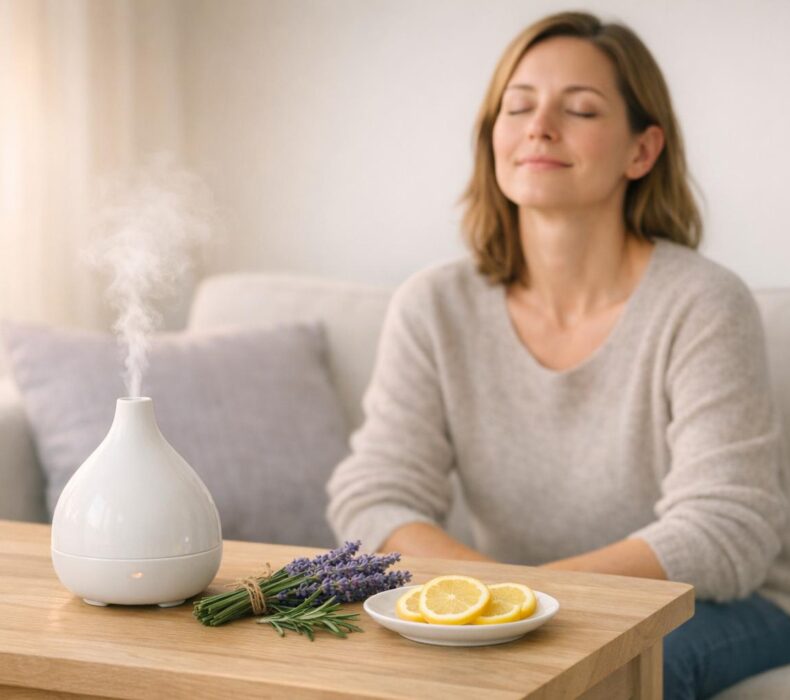
Herbal diffusers, which release essential oils into the air, are gaining attention as a natural option for anxiety relief. Research shows that inhaling specific oils like lavender, rosemary, and citrus can help reduce stress, improve mood, and even lower physical stress markers like heart rate and cortisol levels. Many people are turning to these nicotine-free tools as alternatives to traditional anxiety treatments, which often have side effects.
Key findings include:
- Lavender: Quickly reduces anxiety by interacting with brain neurotransmitters. A meta-analysis of 37 trials showed significant reductions in acute anxiety.
- Rosemary & Peppermint: Reduce stress while improving focus. Studies highlight rosemary’s calming effects and peppermint’s refreshing properties.
- Ashwagandha & Adaptogens: Emerging research suggests vaporized adaptogens may help regulate stress hormones like cortisol.
- Citrus Oils & Frankincense: Citrus oils improve mood and lower blood pressure, while frankincense reduces inflammation linked to anxiety.
While herbal diffusers show promise, research gaps remain, such as inconsistent methods and limited long-term data. Still, they offer a safe, non-addictive option for managing anxiety and improving emotional well-being.
Aromatherapy for Anxiety – How Does It Work?
sbb-itb-364f168
Lavender Diffusers for Anxiety Relief: What Studies Show
Lavender has long been studied for its calming properties, particularly in addressing anxiety. Its soothing effects are linked to interactions with brain neurotransmitters. The key player here is linalool, a major component of lavender, which works by blocking NMDA receptors and enhancing GABA activity at GABAA receptors. This reduces neuronal excitability, encouraging relaxation. Unlike benzodiazepines, which directly bind to the GABA-benzodiazepine receptor site, lavender takes a different route – it activates GABAergic neurons in the central amygdala via the olfactory pathway.
Lavender for Immediate Anxiety Relief
Clinical research highlights lavender’s effectiveness in quickly easing anxiety. A meta-analysis of 37 randomized controlled trials, involving nearly 8,000 participants, showed that lavender inhalation significantly reduced acute anxiety. On the Spielberger’s State-Trait Anxiety Inventory (STAI) scale, participants experienced a mean reduction of –5.99 points in state anxiety, which measures immediate emotional reactions to stress. The overall effect size was notable, with Hedges’ g = –0.73.
Lavender doesn’t just calm the mind – it also impacts physical stress markers. In a 2021 study by Showa University’s Department of Physiology, researchers conducted a randomized crossover trial with 12 healthy adults. Participants inhaled lavender essential oil during a 90-minute sleep cycle. Results showed significant reductions in salivary α-amylase and chromogranin A (CgA) levels, both of which indicate stress in the sympathetic nervous system, compared to a distilled water control.
"Linalool may act on NMDA and GABAA receptors, which cause decreases in α-amylase and CgA secretions."
Brain imaging studies provide additional insights into lavender’s rapid effects. In 2025, researchers at UCLouvain’s Institute of Neuroscience used resting-state fMRI to observe how lavender exposure influenced neural activity. Fourteen healthy women inhaled lavender essential oil for 14 minutes, leading to increased functional connectivity within the brain’s salience network. These effects lasted up to two hours after diffusion.
"Prolonged odorant exposure to lavender can induce long-lasting brain effects detectable up to 2 h afterwards in women."
These findings raise questions about whether consistent use of the best essential oil vapes for lavender could provide more lasting anxiety relief.
Long-Term Use of Lavender Diffusers
While the immediate benefits of lavender are well-documented, researchers are now turning their attention to its potential for long-term anxiety management. Evidence on chronic inhalation is still emerging. The same meta-analysis that demonstrated lavender’s impact on state anxiety also found that it reduced trait anxiety – a person’s general tendency toward anxiety. Participants showed a mean reduction of –8.14 points on the STAI scale.
However, most current studies on long-term anxiety relief focus on oral lavender supplements rather than inhalation. As one systematic review noted:
"Overall, oral administration of lavender essential oil proves to be effective in the treatment of anxiety, whereas for inhalation there is only an indication of a moderate effect, due to the heterogeneity of available studies."
Ongoing clinical trials are investigating whether regular lavender inhalation could reduce reliance on benzodiazepines for managing acute anxiety episodes. These studies aim to determine if lavender diffusers can offer a safer, non-addictive alternative to traditional medications, which often come with risks of dependency and withdrawal.
Rosemary, Peppermint, and Eucalyptus: Research on Herbal Blends
Building on the well-documented benefits of lavender, researchers are now exploring how other herbal blends, like rosemary, peppermint, and eucalyptus, can help with stress and focus. These herbs are showing promise for their ability to ease stress while maintaining or even enhancing mental clarity. This combination of effects expands the range of natural, non-drug options available for managing anxiety.
Rosemary-Peppermint Blends for Stress Reduction
Rosemary is particularly noteworthy for its dual ability to reduce anxiety and sharpen concentration. Its primary active compound, 1,8-Cineole, interacts with GABAA receptors, producing calming effects. For example, a study conducted between February and December 2022 at Kermanshah University of Medical Sciences tested rosemary aromatherapy on 236 general surgery patients. Participants inhaled three drops of 25% rosemary essential oil for 30 minutes, starting an hour before surgery. The results showed a significant reduction in anxiety levels (P = 0.001), with rosemary proving more effective than music therapy or a combination of both.
Rosemary’s effectiveness also extends to everyday stress management. In a 2019 study at Birjand University of Medical Sciences, 78 pre-hospital emergency personnel wore badges infused with 25% rosemary essential oil for two hours during three shifts per week over one month. Results showed a significant decrease in stress and anxiety, as measured by the DASS-42 scale. Lead researcher Hossein Rahimi commented:
"Aromatherapy with rosemary essential oil can have positive effects in reducing stress and anxiety in pre-hospital emergency personnel."
When rosemary is paired with peppermint, the results become even more compelling. A 2013 study in the Journal of Alternative and Complementary Medicine evaluated 14 individuals dealing with mental exhaustion. Participants used personal inhalers containing a blend of peppermint, basil, and helichrysum three times a day for three weeks. Those in the aromatherapy group reported a significantly greater reduction in burnout compared to the placebo group. Peppermint’s key component, menthol, not only creates a cooling sensation but has also been linked to improved physical performance, such as faster running speeds and stronger grip strength.
Eucalyptus further enhances these benefits by promoting relaxation and easing tension.
Eucalyptus Diffusion for Mental and Physical Relaxation
Eucalyptus, known for its high eucalyptol content, is widely recognized for its respiratory benefits, thanks to its anti-inflammatory and antibacterial properties. Though studies on healthy volunteers showed no measurable changes in lung function after using peppermint and eucalyptus oils, participants reported feeling like their breathing was easier. This subjective improvement is often attributed to the cooling effects of menthol and cineole.
In high-stress environments like crowded emergency rooms or busy workplaces, this sensation of easier breathing can help reduce anxiety. Eucalyptus works best when combined with rosemary and peppermint, offering physical relaxation while the other herbs support mental clarity and stress relief.
To summarize, here’s a breakdown of the key components and effects of these herbal blends:
| Essential Oil | Primary Active Component | Key Effect Identified in Research |
|---|---|---|
| Rosemary | 1,8-Cineole | Reduced acute stress and anxiety |
| Peppermint | Menthol | Improved airflow perception; reduced burnout |
| Eucalyptus | Eucalyptol (Cineole) | Perceived breathing ease; anti-inflammatory support |
While the FDA classifies rosemary as "Generally Recognized as Safe" (GRAS), it’s important to note that direct oral consumption of essential oils is not advised due to potential risks like gastrointestinal irritation. Safer methods include diffusion or using supplements made from extracts.
Ashwagandha and Adaptogen Diffuser Research
While lavender, rosemary, and peppermint have long been the focus of herbal diffuser studies, attention is now shifting toward adaptogens – herbs known for helping the body manage stress. Among these, ashwagandha has gained recognition for its potential to reduce anxiety by interacting with the hypothalamic-pituitary-adrenal (HPA) axis, which plays a key role in stress regulation and cortisol production. Researchers are now exploring how adaptogens like ashwagandha can be used in essential oil vapes to manage anxiety.
Ashwagandha Vapor and Cortisol Levels
Ashwagandha’s stress-reducing properties come from its active compounds, withanolides, which are known for their anti-anxiety effects. While most studies focus on oral supplements and extracts, the findings are promising. Meta-analyses conducted in 2024 and 2025, encompassing nine studies (558 participants) and 15 studies (873 participants), respectively, demonstrated that ashwagandha supplementation significantly lowers serum cortisol levels, with reductions of –2.58 and –2.3626.
In addition to cortisol reduction, ashwagandha has been shown to lower anxiety scores. Studies report decreases in Hamilton Anxiety (HAM-A) scores ranging from –2.19 to –3.52 and reductions in Perceived Stress Scale (PSS) scores by approximately –4.7. A 2025 study highlighted the effectiveness of the Zenroot formulation, where 100% of participants experienced clinically meaningful stress reduction compared to just 13.3% in the placebo group.
Adaptogen Blends for Anxiety Management
Beyond ashwagandha alone, researchers are investigating the benefits of multi-herb adaptogen blends for managing anxiety. These blends appear to provide broader effects compared to single-ingredient formulations. For instance, a July 2023 study in Mumbai, India, compared a full-spectrum ashwagandha extract (VL-G-E12) with a multi-herb blend (VL-G-A57) that included Rhodiola, Holy Basil, Schisandra, and ashwagandha. The 60-day randomized trial, involving 186 highly stressed adults, found that while both formulations significantly reduced stress and anxiety, the multi-herb blend showed additional benefits in addressing mood issues (p = 0.0454). The blend also achieved greater reductions in anxiety scores (p = 0.0004) compared to the single-ingredient formulation (p = 0.0015).
Other adaptogen combinations have shown similar potential. For example, a blend of ashwagandha and Brahmi (BacoZen™) reduced perceived stress by 31.78% to 32.46%. Animal studies also support the effectiveness of adaptogens like Holy Basil (Ocimum sanctum), ashwagandha, and Brahmi (Bacopa monnieri), which independently lowered plasma cortisol levels and improved stress resilience. Rogene Eichler West of Northwest Neuro Professionals noted that an ashwagandha blend "showed significant differences compared with ashwagandha root extract and placebo for PSS, HAM-A total score, happiness scales, and mood disturbance (P < 0.05)".
Ashwagandha is generally considered safe for short-term use (30–90 days), with most studies reporting only mild side effects. However, it is not recommended for pregnant or nursing women, and individuals with ashwagandha allergies should avoid it.
Citrus and Frankincense Diffusers: Effects on Anxiety
Citrus essential oils influence neurotransmitters, while frankincense works to reduce neuroinflammation. Together, they offer powerful options for managing anxiety.
Citrus Oils for Mood Improvement
Citrus essential oils, especially bitter orange (Citrus aurantium), have been shown to significantly reduce anxiety levels. A meta-analysis from January 2026, involving 666 participants across seven randomized controlled trials, revealed that inhaling bitter orange or neroli oil led to a -12.45 mean difference on the State-Trait Anxiety Inventory. Further network analysis ranked Citrus aurantium as the most effective oil for addressing trait anxiety, with a weighted mean difference of -9.62.
The calming effects of citrus oils are largely due to citral, a key monoterpenoid found in oils like litsea cubeba and lemongrass. Citral influences neurotransmitters such as GABA, serotonin, and dopamine, while also regulating the hypothalamic-pituitary-adrenal (HPA) axis.
"Inhalation aromatherapy using C. aurantium essential oil and neroli oil effectively reduces anxiety." – Traditional and Integrative Medicine
Beyond reducing anxiety scores, citrus oils bring measurable physical benefits. Studies show that inhaling these oils lowers systolic blood pressure by -6.83 mmHg and heart rate by -3.43 beats per minute. A 2021 study involving 39 clinical nurses demonstrated that diffusing citrus blends, including Grapefruit and Wild Orange, over two weeks improved mood scores by an average of 4.89. Lemon oil (Citrus limon) also showed moderate-to-large effects on trait anxiety, with a weighted mean difference of -8.48.
While citrus oils provide quick mood enhancement, frankincense offers a more lasting sense of calm.
Frankincense for Emotional Calm
Frankincense addresses anxiety through its anti-inflammatory properties. A 2021 laboratory study on 50 male Wistar rats found that a 200 mg/kg dose of frankincense ethyl acetate extract significantly reduced anxiety-like behaviors in elevated plus-maze tests. This effect is linked to its ability to lower inflammatory markers like IL-6 and TNF-α.
"Frankincense extract can mitigate the LPS-induced depression and anxiety-like behaviors… through reduction of inflammatory cytokines." – Learning and Motivation
The active compound 3-acetyl-11-keto-β-boswellic acid (AKBA) plays a key role in this process. It reduces activity in the NF-κB pathway, which helps regulate emotional responses. Additionally, frankincense contains 11-keto-beta-boswellic acid, which inhibits the 5-lipoxygenase enzyme, blocking the production of leukotrienes involved in inflammation.
Citrus oils and frankincense offer natural solutions for anxiety. Citrus provides fast-acting relief, while frankincense delivers sustained emotional balance through its anti-inflammatory and neuroprotective effects.
Comparing Different Herbal Diffusers for Anxiety
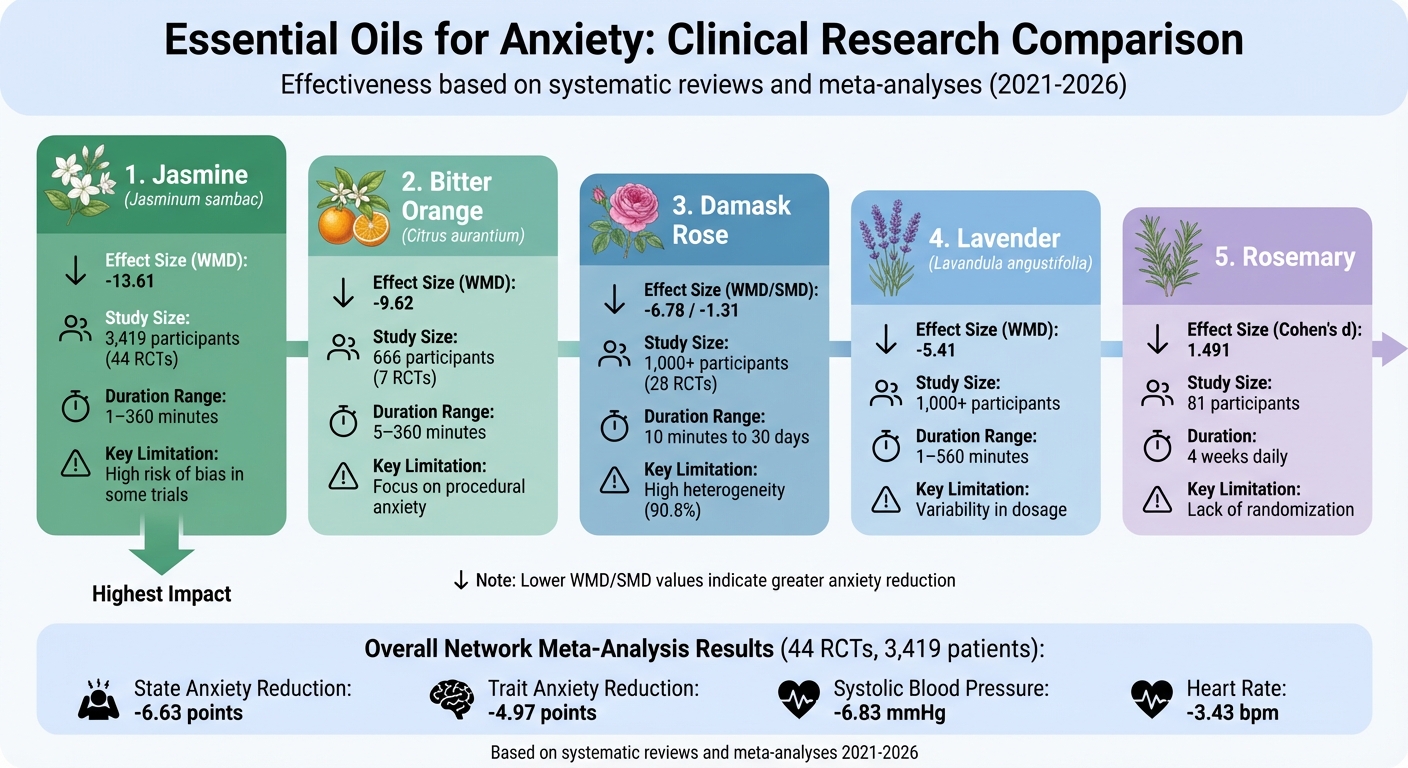
Essential Oils Effectiveness for Anxiety Relief: Research-Backed Comparison
Recent studies shed light on the effectiveness of various herbal diffusers in reducing anxiety, with jasmine, bitter orange, and lavender taking center stage. Among these, jasmine (Jasminum sambac) stands out, showing the most significant reduction in state anxiety. It achieved a weighted mean difference (WMD) of –13.61 on anxiety scales. Bitter orange (Citrus aurantium) follows closely with a WMD of –9.62, making it a strong option for both state and trait anxiety. On the other hand, lavender (Lavandula angustifolia), though widely researched, demonstrates only a moderate effect size of –5.41. These results align with earlier findings that also highlighted benefits from lavender and rosemary.
To make these findings easier to grasp, the table below compares the key outcomes for each essential oil:
Study Findings Comparison Table
| Essential Oil | Effect Size (WMD/SMD) | Study Participants | Typical Duration | Limitations |
|---|---|---|---|---|
| Jasmine | –13.61 (WMD) | 3,419 across 44 RCTs | 1 min to 360 min | High risk of bias in some trials; limited long-term data |
| Citrus aurantium | –9.62 (WMD) | 666 across 7 RCTs | 5 min to 360 min | Focus on procedural anxiety; safety data often missing |
| Damask Rose | –6.78 (WMD) / –1.31 (SMD) | 1,000+ across 28 RCTs | 10 min to 30 days | High heterogeneity (90.8%); potential publication bias |
| Lavender | –5.41 (WMD) | 1,000+ across multiple reviews | 1 min to 560 min | Variability in dosage and conflicting physiological result reports |
| Rosemary | 1.491 (Cohen’s d) | 81 in a single study | 4 weeks daily | Quasi-experimental design; lack of randomization |
The reliability of these findings varies significantly. Around 60% of aromatherapy studies focus on short-term procedural anxiety rather than chronic conditions. Additionally, differences in sample sizes, dosage levels, and methodologies contribute to high variability in results. A systematic review of 76 studies revealed that 70% reported positive effects on stress and anxiety, though many failed to provide detailed data on dosage and safety.
These insights highlight the need for more standardized and long-term research to fully understand the potential of herbal diffusers in managing anxiety.
Research Limitations and Future Studies
The potential of herbal diffusers is an intriguing area of study, but current research has some noticeable gaps. Many studies rely on small sample sizes, often with 20 or fewer participants. This not only limits the broader applicability of the findings but might also lead to an overestimation of their benefits.
Adding to this challenge are inconsistencies in research methods. Studies often vary in key factors like dosage, inhalation duration, and application techniques. For example, a systematic review of 76 studies found that while 70% reported anxiety-reducing effects, many failed to clarify important details such as dosage and safety measures. As highlighted in Complementary Therapies in Clinical Practice:
There is a clear need for the development of standard protocols for research in this area, generating measurable results which will create the opportunity for more rigorous evidence-based outcomes.
Another common issue is the reliance on self-reported anxiety scales, such as the State-Trait Anxiety Inventory (STAI). While these tools capture subjective experiences, they often don’t align with objective data like EEG readings or heart rate variability. This discrepancy reveals a gap between how participants feel and measurable physiological changes. Additionally, some studies use extremely short exposure times – sometimes as brief as five minutes – which might not be enough to produce significant physiological effects, even if participants subjectively report feeling calmer.
Geographic concentration is another limitation. A significant portion of the research originates from a single region, raising questions about its relevance to other populations. For instance, one review of 44 randomized controlled trials found that 75% were conducted in Iran. Similarly, 85.7% of studies on rose essential oil came from the same country. This matters because the composition of essential oils can vary based on factors like plant origin, extraction methods, and subspecies. Results from one batch of oil might not replicate with another due to these variations.
To address these limitations, future studies should focus on larger, longer-term trials with diverse participant groups. Combining subjective measures like questionnaires with objective markers such as cortisol levels, EEG data, and heart rate variability would provide a more comprehensive understanding of the effects of herbal diffusers. Standardizing protocols around oil concentrations, diffusion methods, and exposure durations would also make it easier to compare results across different studies. These steps would help build a stronger evidence base for the role of herbal diffusers in managing anxiety, complementing the promising findings seen so far.
Conclusion
A network meta-analysis of 44 RCTs involving 3,419 patients reveals that essential oils can reduce state anxiety by 6.63 points, trait anxiety by 4.97 points, systolic blood pressure by 6.83 mmHg, and heart rate by 3.43 bpm.
Studies on lavender, rosemary, and adaptogen blends highlight that herbal diffusers provide a natural, nicotine-free option for managing anxiety. They stand out for their affordability, ease of use, and environmentally friendly nature. For individuals looking to move away from pharmaceutical treatments like benzodiazepines – which come with risks of dependency and side effects – herbal diffusers present a safe, non-addictive alternative.
However, current research does face some limitations, including small sample sizes, short exposure periods, and inconsistent application methods. There’s also a noticeable gap between subjective feelings of relaxation and measurable physiological outcomes, pointing to the need for more thorough studies that combine self-reported experiences with objective data.
These findings suggest that herbal diffusers hold promise as an accessible and complementary tool for wellness. Whether you’re exploring best nicotine-free vapes or managing stress and anxiety, these botanical solutions can be a helpful addition to your routine. For more information about herbal diffusers and other nicotine-free wellness options, check out No Nic Vapes.
FAQs
How long should I diffuse an essential oil to feel calmer?
To help with relaxation and ease anxiety, research indicates that diffusing essential oils for 15 to 30 minutes works well. This timeframe lets the fragrance spread throughout the room, offering soothing effects without risking overexposure. Make sure the area is well-ventilated for optimal results.
Are herbal diffusers safe to use every day for anxiety?
Herbal diffusers are considered safe for daily use and may help ease anxiety. Research indicates that inhaling essential oils such as lavender, Melissa officinalis, and Rosa damascena can have a calming effect on mood and stress levels. That said, the results can differ based on how you use them. Be sure to stick to the product instructions, and if you have any doubts or health concerns, it’s a good idea to check with a healthcare professional.
Which essential oil is best for my type of anxiety (acute vs. ongoing)?
Lavender essential oil has earned a reputation as a trusted remedy for anxiety. Studies show it can help with both sudden stress and longer-term issues like generalized anxiety disorder. Its soothing effects and reliable outcomes in clinical research make it a popular choice for those seeking natural relief.