

Best caffeine vapes deliver a fast, controlled energy boost without the need for coffee or energy drinks. These devices are portable, sugar-free, and allow precise dosing, making them ideal for busy schedules, workouts, or combating afternoon fatigue. Key times to use caffeine vapes include:
- Morning (6-9 AM): Quickly shake off grogginess with 2-3 puffs.
- Pre-Workout (30-60 minutes before): Boost performance without digestive discomfort.
- Afternoon Slump (1-4 PM): Regain focus with a few controlled puffs.
- Evening Work/Study (6-10 PM): Microdose to stay alert while avoiding overstimulation.
- Travel/Commute: Convenient energy on the go, without bulky drinks.
To use safely, stay under the FDA’s daily caffeine limit of 400 mg, hydrate regularly, and avoid vaping within 8 hours of bedtime to protect sleep. Caffeine vapes are a quick, effective option for managing energy but should complement, not replace, healthy habits.
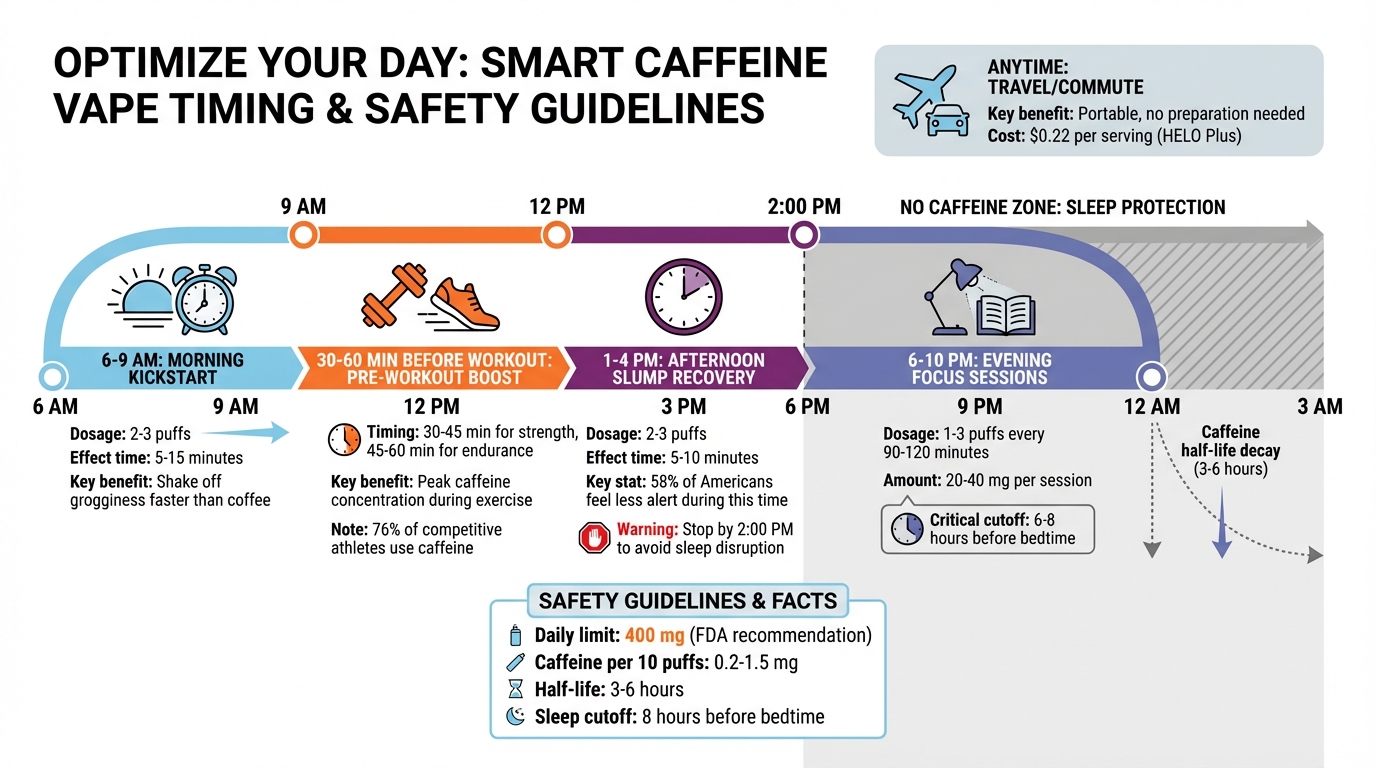
Best Times to Use Caffeine Vapes Throughout the Day
Morning Kickstart (6-9 AM)
When to Use
If you struggle with morning grogginess or sleep inertia, a caffeine vape can help you shake off that fog much faster than waiting for your coffee to kick in. Since the caffeine is absorbed directly through your lungs, you can start feeling more alert in just 5 to 15 minutes. Compare that to the 20 to 30 minutes it usually takes for coffee to work its magic.
Caffeine vapes are super handy when you’re in a rush – whether you’re dashing to work, heading to an early gym session, or simply don’t have time to enjoy a cup of coffee. Plus, they’re a solid option for anyone who finds coffee on an empty stomach a bit too harsh. Here are some practical tips to make the most of your morning energy boost.
Tips for Best Results
- Start small: If you’re new to caffeine vapes, begin with 2 to 3 puffs to see how your body reacts. The fast absorption can feel stronger than expected, even though the caffeine dose is much smaller than a typical cup of coffee. Most devices deliver between 0.2–1.5 mg of caffeine per 10 puffs, so you can easily control your intake.
- Stay hydrated: Drink 10–17 oz of water within 15 minutes of waking up. This helps combat the dehydration that naturally happens overnight.
- Eat a balanced breakfast: Pair your vape with a meal that includes 15 to 20 grams of protein, like eggs or Greek yogurt. This can keep your energy steady throughout the morning.
- Get some sunlight: If you can, spend 5 to 10 minutes outside in natural light. It helps reset your internal clock and gives your cortisol levels a natural boost.
Pre-Workout Boost (30-60 Minutes Before Exercise)
Timing for Best Results
Getting the timing right can make a noticeable difference in your workout performance. Caffeine typically hits its peak concentration in your bloodstream about 30 to 75 minutes after consumption. For most people, 99% of the caffeine is absorbed within 45 to 60 minutes. To make the most of this, use your vape 30–60 minutes before your workout to hit that peak at just the right time.
If you’re focusing on strength training, aim for the 30–45 minute mark before tackling heavy lifts. This timing boosts neuromuscular activation, helping you move weight more efficiently. For endurance activities like running or cycling, using your vape 45–60 minutes ahead of time can help delay fatigue and keep your concentration sharp. The International Society of Sports Nutrition (ISSN) supports this timing for both trained and untrained individuals, especially for endurance and high-intensity interval training.
"Caffeine ingested ~60 minutes before exercise improves performance in trained and untrained individuals, particularly in endurance and high-intensity intervals." – International Society of Sports Nutrition (ISSN)
By sticking to these timing recommendations, you’ll be primed for both strength and endurance-focused workouts.
Benefits for Active People
Caffeine vapes offer a convenient, portable alternative to traditional pre-workout drinks, especially if you’re looking to avoid digestive discomfort. Since the caffeine enters your bloodstream directly through your lungs, you can skip the bloating or upset stomach that often comes with drinking large pre-workout shakes.
It’s no surprise that about 76% of competitive athletes already rely on caffeine as their go-to performance enhancer. Vapes make it even easier – compact, no mixing required, and allowing for precise dosing with each puff. On top of that, caffeine helps mobilize fatty acids, which preserves muscle glycogen for better performance. With L-theanine added, you can enjoy enhanced focus without the jitters.
Afternoon Slump Recovery (1-4 PM)
Best Timing to Restore Energy
The afternoon slump hits most people between 1:00 and 4:00 PM, thanks to natural circadian rhythms. In fact, 58% of Americans report feeling less alert during this time. Using caffeine vapes between 1:00 and 2:30 PM can help you regain focus before fatigue fully sets in.
Vaping offers a quick boost, typically noticeable within 5–10 minutes. But timing is crucial – stop by 2:00 PM. Why? Caffeine’s half-life is about 3 to 6 hours, meaning a late dose could linger into the evening, disrupting your sleep.
Staying Focused Without the Crash
To make the most of this energy window, caffeine vapes provide a balanced lift in just 2–3 puffs, keeping you alert without overdoing it.
"The boost is clean and controlled, avoiding the wired-then-wiped pattern associated with stronger coffees or energy drinks." – HealthVape ENERGY Review
Many of the best nicotine-free vapes with caffeine are also formulated with L-Theanine, an amino acid that reduces jitters while promoting calm focus. For the best results, pair your vape with 16 ounces of water to stay hydrated, and take a quick 5-minute walk afterward. The combination of movement and caffeine can extend your focus for 2 to 3 hours, maintaining steady energy without a harsh crash.
Study or Work Focus Sessions (Evening, 6-10 PM)
Spacing Doses for Steady Focus
Evening focus sessions call for careful microdosing to maintain steady alertness. Aiming for 1–3 puffs every 90–120 minutes provides around 20–40 mg of caffeine per session, ensuring consistent focus without overloading your system.
Keep in mind that caffeine has a half-life of about 5 hours. A dose taken at 6:00 PM could still be active at 11:00 PM. Studies show that consuming 400 mg of caffeine even six hours before bed can cut total sleep time by more than an hour.
"A few pulls are usually enough to help me settle back into work without feeling overstimulated. The lift feels clean and controlled." – HealthVape Product Review
To protect your sleep, set a strict cutoff for caffeine intake at least 6 to 8 hours before your intended bedtime. If you plan to sleep by midnight, avoid taking your last puff any later than 4:00 to 6:00 PM. This strategy allows you to stay productive in the evening without compromising your rest.
Balancing Energy and Relaxation
While microdosing helps sustain focus, balancing energy levels with relaxation is just as important. Managing stimulation effectively prevents the risk of feeling overstimulated, which is a common issue with evening caffeine use.
Many caffeine vapes are formulated with L-Theanine, a compound known for promoting calm focus without reducing alertness. A well-balanced mix typically pairs 200 mg of L-Theanine with 100 mg of caffeine, helping to smooth out any jittery effects and keep productivity on track.
If you start to feel overstimulated during your session, pause caffeine intake and try a 10-minute NSDR (Non-Sleep Deep Rest) protocol to reset and relax. Staying hydrated is another key factor – adequate hydration can reduce the intensity of caffeine-related jitters.
Even if you feel like you can push through a late night, remember that evening caffeine use can reduce REM sleep by 25% and deep sleep by 20%, which might leave you feeling less refreshed the next day.
Travel or Commute Energy (Anytime On-the-Move)
Convenience for Busy Schedules
Caffeine vapes offer a practical solution for staying energized while traveling. Whether you’re driving, flying, or navigating public transit, these compact devices eliminate the need for brewing or preparation. They’re small enough to fit in your pocket or carry-on, making them far easier to manage than lugging around cans of energy drinks or coffee cups.
One standout feature is their quick absorption. This makes them especially handy for dealing with jet lag or sudden schedule changes. For example, the HELO Plus provides up to 800 puffs per unit at about $0.22 per serving, offering a budget-friendly option for longer trips.
"Whether you’re driving, flying, or taking public transport, disposable caffeine vapes offer a convenient way to stay energized." – CaffeineVape.com
This accessibility allows you to manage your energy levels effortlessly while on the go. However, using them effectively requires some attention to dosage.
Avoiding Jitters While Traveling
To avoid overstimulation, start with 2–5 puffs and gauge how your body reacts. If you’re particularly sensitive to stimulants, wait 10–15 minutes between uses to prevent consuming too much. Since the effects kick in almost immediately, this cautious approach helps you dodge the energy crashes that often follow large doses of traditional caffeinated drinks.
Opt for vape formulations that include ingredients like L-Theanine or Vitamin B12. These additions can provide a smoother energy boost and reduce the chance of feeling jittery. Staying hydrated is also crucial – travel itself can be dehydrating, and pairing your vape use with water can help maintain balance. Lastly, avoid using caffeine vapes late in the evening or toward the end of a long trip to protect your sleep cycle. When used thoughtfully during transit, caffeine vapes can be a reliable tool for maintaining steady energy throughout your day.
sbb-itb-364f168
Safe Usage Guidelines
Monitoring Daily Caffeine Intake
The U.S. Food and Drug Administration (FDA) suggests that healthy adults keep their daily caffeine intake under 400 mg. That’s about the same as four 8-ounce cups of coffee or 10 cans of cola. To stay within this limit, you’ll need to account for all your caffeine sources – coffee, tea, energy drinks, sodas, and even caffeine vapes. Each puff from a caffeine vape can deliver anywhere from 0.2 mg to 1.5 mg of caffeine, which adds up faster than you might think. Keeping track of your intake is essential for maintaining steady energy levels throughout the day.
"For most healthy adults, the FDA has cited 400 milligrams (mg) of caffeine per day as an amount not generally associated with dangerous, negative effects."
– U.S. Food and Drug Administration
Using product labels or tracking apps can help you monitor your total caffeine consumption. If you notice symptoms like jitters, a racing heart, headaches, or anxiety, it’s a sign you may need to cut back. It’s also worth noting that caffeine sensitivity varies from person to person, influenced by factors like genetics, body weight, and metabolism. Some individuals might feel adverse effects even when consuming less than 400 mg a day. Plus, caffeine doesn’t leave your system immediately – it can linger for hours after the initial buzz wears off.
Pairing with Hydration and Healthy Habits
Once you’re mindful of your caffeine intake, complementing it with good habits can make a big difference. Caffeine can have a dehydrating effect, so drinking water regularly is a smart move. Starting your day with a glass of water and staying hydrated throughout can help counterbalance this. Avoid consuming caffeine on an empty stomach since it may increase stomach acid and stress hormone levels. Instead, pair your caffeine with a protein-packed snack or a balanced meal that includes healthy fats to stabilize your body’s response.
Caffeine also increases your body’s need for B vitamins like B6, B12, and folate, which are essential for energy metabolism. Without replenishing these nutrients, you might feel “wired but drained.” Adding foods rich in B vitamins to your diet – or opting for caffeine vapes that include B12 – can help. Some caffeine vape formulations even include L-theanine, an amino acid that may help reduce jitters and promote calm focus. Combining hydration, nutritious snacks, and these supplements creates a better balance for your daily energy needs.
Avoiding Late-Night Use
Using caffeine vapes too close to bedtime can seriously interfere with your sleep. Caffeine works by blocking adenosine, a brain chemical that signals when it’s time to rest. Since caffeine’s half-life is several hours, its effects can linger long after the initial energy boost. Research shows that caffeine can reduce total sleep time by about 45 minutes.
"Even though caffeine makes you feel energized, it’s important for people to understand that it doesn’t replace a good night’s rest."
– Dr. Dustin Cotliar, Sleep Physician
To safeguard your sleep, set a firm cutoff for caffeine use at least 8 hours before bedtime. For example, if you plan to sleep at 10:00 PM, avoid caffeine vapes after 2:00 PM and consider melatonin vapes for sleep. Studies also reveal that consuming 400 mg of caffeine just 6 hours before bed can result in losing over an hour of sleep. By sticking to these guidelines, you can maintain your energy during the day without sacrificing rest at night.
Who Benefits Most from Caffeine Vapes?
Students and Professionals
For those burning the midnight oil – whether it’s cramming for exams or racing to meet work deadlines – caffeine vapes offer a quick and efficient energy boost. Unlike coffee, which takes time to brew and consume, vaping delivers caffeine almost instantly. Plus, their discreet and portable design allows you to manage your intake one puff at a time, giving you control over how much energy you need without committing to an entire cup of coffee. While caffeine vapes can be a handy tool for short-term energy, they’re no substitute for proper rest.
Athletes and Fitness Enthusiasts
Before a tough workout, caffeine vapes provide a fast-acting energy kick without the heaviness of traditional pre-workout drinks or supplements. Research published in the Journal of Applied Physiology highlights that caffeine consumption can improve endurance performance by 3.2%. Unlike sugary energy drinks, caffeine vapes are calorie- and sugar-free, helping you avoid energy crashes later on. For best results, using a vape 30–60 minutes before exercising ensures your body absorbs the caffeine effectively, all without the risk of digestive discomfort.
Frequent Travelers
For those constantly on the move, caffeine vapes are a convenient and portable energy source. Whether you’re navigating layovers, long flights, or irregular schedules, they offer a quick pick-me-up without the hassle of brewing coffee or carrying bulky energy drinks. A study involving 15,880 active-duty Navy personnel found that 87% used caffeine to combat stress and sleep deprivation, a scenario many frequent travelers can relate to. With their compact design and rapid effects, caffeine vapes are a practical option when access to traditional caffeinated beverages is limited. However, it’s important to monitor your overall caffeine intake, particularly if you’re also drinking coffee or energy drinks. Pairing vaping with healthy habits ensures you maintain energy levels without overdoing it.
Inhale Health Caffeine Inhaler Energy Review
Conclusion
This checklist highlights the best times to use caffeine vapes for steady energy levels. Timing your doses to match your body’s natural rhythms is key – start about 90–120 minutes after waking, take small puffs during the afternoon slump (1:00–4:00 PM), and stop 8–12 hours before bedtime.
Caffeine vapes offer a sugar-free, calorie-free option with quick absorption, delivering noticeable effects in just 10–15 minutes. Their puff-by-puff dosing allows for precise control, helping you maintain energy without the jitters.
To use them safely, keep your total caffeine intake within the FDA’s recommended 400 mg daily limit. With each 10 puffs providing 0.2–1.5 mg of caffeine, it’s easier to track your consumption compared to a standard cup of coffee, which contains around 90 mg. Pair your doses with water to counteract caffeine’s diuretic effects, and remember that these vapes should never replace proper sleep or a balanced diet.
Whether you’re a student pulling an all-nighter, an athlete prepping for a workout, or a traveler adjusting to new time zones, caffeine vapes offer a convenient and controlled energy boost. Stick to your body’s natural energy patterns, stay hydrated, and think of these devices as a supplement – not a substitute – for a healthy lifestyle. With these strategies, you can incorporate caffeine vapes into your routine seamlessly and maintain balanced energy throughout the day.
FAQs
How many puffs equal a cup of coffee?
The amount of puffs from a caffeine vape that equals the energy boost of a cup of coffee depends on several factors, including the device and the caffeine concentration in the product. On average, 10 to 15 puffs from a standard caffeine vape might deliver a similar effect to one cup of coffee. However, this can vary depending on personal habits and the specific product being used.
Can caffeine vapes make anxiety or heart racing worse?
Caffeine vapes have the potential to heighten anxiety or trigger a racing heartbeat, particularly if they’re overused or if you’re sensitive to the stimulating effects of caffeine. To minimize these risks, it’s crucial to use them sparingly and stay aware of your personal tolerance levels.
Are caffeine vapes safe to use daily?
The safety of using caffeine vapes daily remains unclear. While they offer a fast energy boost, there are concerns about their long-term effects, possible lung irritation, and unpredictable absorption rates. Experts advise approaching these products with caution, as excessive use or dependency could lead to health risks. Keep an eye on new research and use them sparingly to minimize potential problems.
Related Blog Posts
- 5 Best Caffeine Vapes for Energy in 2026
- Best Melatonin Vape Brands in 2026
- Can’t Sleep? How Melatonin Vapes Can Help
- Caffeine Vaping vs Energy Drinks: Health Pros and Cons
Related: Best Nicotine-Free Disposable Vapes