

Essential oil vapes may seem like a healthier alternative to nicotine-free options like vitamin vaping, but they come with serious risks. Heating essential oils to high temperatures produces harmful compounds that can damage your lungs and respiratory system. Immediate effects include coughing, throat irritation, and allergic reactions, while long-term risks involve chronic bronchitis, hormonal disruption, and even chemical pneumonia.
Key points to know:
- Heating Risks: Essential oils can release toxic substances like volatile organic compounds (VOCs) and formaldehyde when heated above 150°F.
- Health Concerns: Potential issues include lung inflammation, lipoid pneumonia, and airway toxicity.
- Unregulated Products: These vapes lack FDA oversight, leaving ingredients and contaminants unchecked.
- Safer Alternatives: Stick to non-heated methods like diffusers, aroma sticks, or topical applications.
The bottom line: Avoid vaping essential oils. Opt for safer aromatherapy methods that don’t involve inhaling heated substances.
Is Vaping Essential Oils Safe? (PuffiAir Lung Detox Pen Exposed)

sbb-itb-364f168
How Essential Oil Vapes Work
Essential oil vapes rely on battery-powered heating elements to turn a liquid mixture into an inhalable aerosol. This process is almost identical to how e-cigarettes function, except essential oils take the place of nicotine. When the device is activated, the heating element vaporizes the liquid, creating a fine mist that can be inhaled.
What sets this apart from traditional aromatherapy is how the oils are delivered. Standard diffusers use ultrasonic vibrations or low heat to disperse diluted oils into the air, producing larger droplets (usually over 20 microns) that settle on surfaces. Vapes, however, produce ultrafine particles (0.1–2.5 microns) capable of reaching deep into the lungs’ alveoli. This difference raises important questions about safety and health implications.
Components and Ingredients in Essential Oil Vapes
The liquid used in these vapes – often called "e-juice" – is typically a mix of essential oils, water, and carrier bases like vegetable glycerin (VG) or propylene glycol (PG). These carriers not only create the visible vapor but also prevent the oils from clogging the heating components. Some manufacturers include medium-chain triglycerides (MCT oil) to thin the mixture.
Some brands also market "functional" vapes infused with additives like melatonin vapes, caffeine, or vitamin B12. However, there’s no scientific proof that these supplements can be effectively absorbed through the lungs, as most vitamins require digestion to enter the bloodstream. Additionally, certain devices may contain harmful additives like diacetyl (linked to "popcorn lung"), acetoin, or vitamin E acetate (associated with EVALI). These substances can become even more dangerous when exposed to the high heat of vaping.
Chemical Changes When Essential Oils Are Heated
Heating essential oils significantly alters their chemical makeup. Vaping devices typically operate at temperatures between 392°F and 482°F (200°C to 250°C), far exceeding the 150°F to 180°F range where harmful compounds begin to form. At these high temperatures, essential oils can produce volatile organic compounds (VOCs), carbon monoxide, and other harmful substances. For instance, citrus oils containing limonene may react with ozone during heating, forming formaldehyde – a known carcinogen.
These chemical changes pose potential risks to lung health.
"When heated to such high temperatures, essential oils become volatile organic compounds."
– Mary Fleming, Legal Research Assistant, Public Health Law Center
Unlike cold-mist diffusers, which preserve the oils’ natural properties, vaping exposes the oils to intense heat, transforming them into potentially harmful compounds. This stark difference highlights the need for caution when using essential oil vapes, as the resulting substances may not be as benign as they seem.
Health Risks of Vaping Essential Oils
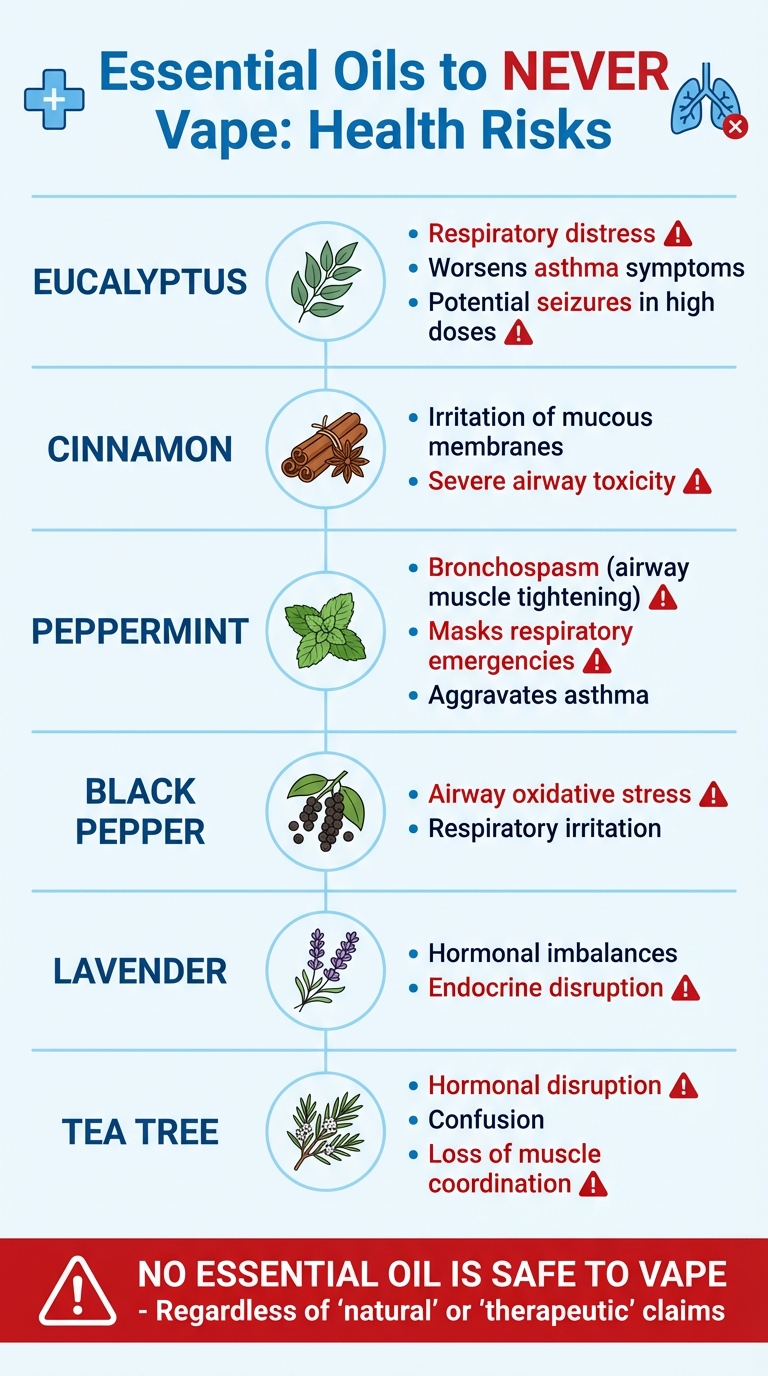
High-Risk Essential Oils for Vaping: Health Risks and Side Effects
Vaping essential oils comes with serious health concerns, both immediate and long-term. When exposed to the high temperatures used in vaping devices – typically between 392°F and 482°F – these oils can break down and form harmful compounds that may damage the lungs and airways.
Immediate Side Effects
Inhaling essential oils through vaping can lead to a range of immediate symptoms, including coughing, wheezing, shortness of breath, and chest pain. Many users report throat irritation, nasal and oral swelling, and inflammation of lung tissues. Other effects can include dizziness, headaches, nausea, and even a temporary loss of smell.
For some, allergic reactions can escalate into severe issues like itching, swelling of the throat, and bronchospasms, which involve a dangerous tightening of airway muscles. One particularly serious condition linked to inhaling oil-based substances is lipoid pneumonia, a type of lung inflammation caused by fat particles entering the lungs. A 2022 study highlighted additional concerns, showing that inhaling essential oils for prolonged periods – such as one hour or more daily – can lead to increased heart rates, higher blood pressure, and reduced lung function.
Menthol-containing oils, like peppermint, present their own risks. They can create a misleading sensation of clear airways, potentially masking serious respiratory problems. Those with asthma or COPD face even higher risks of respiratory distress and should consult a healthcare professional before using essential oil products in any form.
While these immediate effects are concerning, the long-term consequences of vaping essential oils can be even more severe.
Potential Long-Term Health Effects
Research into the long-term effects of vaping essential oils is still developing, but existing evidence points to troubling possibilities. Prolonged use may lead to chronic bronchitis, recurrent lung infections, changes to immune function, and irreversible lung damage. The EVALI outbreak of 2019–2020, which involved vaping products containing oil-based additives, resulted in at least 68 deaths – highlighting the dangers of inhaling such substances.
"Essential oils are highly concentrated and can be toxic when heated and inhaled… They can cause severe lung inflammations and chemical pneumonia and even produce dangerous compounds when heated."
– Brian Townsend, Founder and Principal, Eagle 6 Training
Another area of concern is hormonal disruption. Oils like lavender and tea tree have been identified as potential endocrine disruptors, meaning they can interfere with hormonal balance, particularly in young males before puberty. Compounding the risks, many essential oil vaping products are unregulated and may contain hidden additives like diacetyl, propylene glycol, or vitamin E acetate – substances linked to severe lung conditions.
High-Risk Essential Oils to Avoid Vaping
Some essential oils are especially hazardous when vaped due to their chemical properties. Eucalyptus, cinnamon, peppermint, and black pepper are known to cause airway toxicity and impair respiratory immune responses. For instance:
- Eucalyptus can worsen asthma symptoms and, in extreme cases, cause seizures.
- Cinnamon is known to irritate mucous membranes and contribute to airway toxicity.
- Peppermint may trigger bronchospasms and mask serious respiratory issues, particularly for those with asthma.
- Black pepper has been linked to oxidative stress in the airways and respiratory irritation.
| Essential Oil | Vaping Risks |
|---|---|
| Eucalyptus | Respiratory distress, asthma symptoms, potential seizures in high doses |
| Cinnamon | Irritation of mucous membranes, severe airway toxicity |
| Peppermint | Bronchospasm, masking of respiratory emergencies, asthma aggravation |
| Black Pepper | Airway oxidative stress, respiratory irritation |
| Lavender | Hormonal imbalances, endocrine disruption |
| Tea Tree | Hormonal disruption, confusion, loss of muscle coordination |
Even oils marketed for specific purposes, such as black pepper for nicotine withdrawal, pose significant risks without proven benefits. The bottom line? No essential oil is safe to vape, regardless of claims about its natural or therapeutic properties; instead, consider the benefits of nicotine-free vaping using regulated, oil-free alternatives.
Essential Oil Vapes vs. Nicotine Vapes
Essential oil vapes are often marketed as a wellness product, but they are not inherently safer than nicotine vapes. Both devices introduce foreign substances into the lungs using similar heating technology. As Mary Fleming, Legal Research Assistant at the Public Health Law Center, points out:
"The truth is that these devices can be just as harmful as e-cigarettes, as both are introducing foreign substances into the lungs."
This concern highlights the potential dangers of heating essential oils, which can produce harmful compounds.
Comparing Risks and Benefits
Nicotine vapes and essential oil vapes share a similar mechanism: they heat liquids to create vapor. However, the substances being vaporized differ. Nicotine vapes contain nicotine, flavorings, and carrier liquids like propylene glycol and vegetable glycerin. Essential oil vapes, on the other hand, vaporize concentrated plant extracts often mixed with water or vegetable glycerin.
One critical difference lies in their heating temperatures. Nicotine vapes operate at temperatures up to 482°F, while essential oils can release toxic volatile organic compounds (VOCs) at much lower temperatures – between 150°F and 180°F. This means heating essential oils may produce harmful byproducts that wouldn’t exist at room temperature. Additionally, neither device is FDA-approved for smoking cessation.
Here’s a side-by-side comparison of their features and risks:
| Feature | Nicotine Vapes | Essential Oil Vapes |
|---|---|---|
| Primary Ingredient | Nicotine (highly addictive) | Concentrated plant extracts |
| Intended Purpose | Smoking alternative or cessation aid | Relaxation, stress relief, wellness |
| Addictive Potential | High | Low to none |
| Specific Health Risks | Cardiovascular issues, nicotine addiction | Lipoid pneumonia, allergic reactions, hormonal disruption |
| Shared Risks | Lung inflammation, VOC exposure, respiratory irritation | Lung inflammation, VOC exposure, respiratory irritation |
| Regulatory Status | FDA-regulated under the Deeming Rule | Largely unregulated |
| Marketing Language | Tobacco alternative | "Natural", "Organic", "Vitamin-infused" |
The lack of regulation for essential oil vapes raises additional concerns. While nicotine vapes are subject to FDA oversight, essential oil products are not monitored for their purity, concentration, or potential contaminants like heavy metals and pesticides. Both types of vapes may also include additives such as diacetyl and propylene glycol, which can irritate the airways. The takeaway? Neither option is safe for your lungs, regardless of how they are marketed. For those looking to quit, exploring the best nicotine free pods may offer a different path forward.
Safer Ways to Use Essential Oils
If you’re looking to enjoy essential oils without the risks associated with vaping, traditional aromatherapy methods are a much safer bet. These methods avoid exposing oils to high heat – typically above 150°F to 180°F – which can break them down into harmful volatile organic compounds. Instead, they focus on natural evaporation or gentle dispersion, keeping the oils’ chemical structure intact.
Standard Aromatherapy Methods
Ultrasonic diffusers work by combining water and ultrasonic vibrations to create a cool mist, dispersing essential oil molecules throughout a room. This method avoids high heat, making it safer for regular use. For those with weakened immune systems or respiratory issues, waterless diffusers might be a better option. As Emily Brown, MPH, explains, "waterless diffusers are recommended for immunocompromised people or those with respiratory problems, as the lack of water reduces the risk of waterborne bacteria being released". These alternatives provide a stark contrast to the risks associated with vaping.
Steam inhalation is another option, especially for easing respiratory congestion. Add 1–2 drops of essential oil to a bowl of hot (but not boiling) water, drape a towel over your head, and inhale the steam. Keep in mind, this method isn’t suitable for children under 7.
Topical application allows for targeted relief when essential oils are properly diluted with carrier oils like jojoba, coconut, or sweet almond oil. A safe dilution ratio is 1–3% (6–18 drops per ounce/30 mL) for everyday use. Always perform a patch test on your inner forearm and wait 24 hours to check for any reaction. Additionally, avoid applying citrus oils like lemon, lime, or bergamot to skin that will be exposed to sunlight within 12 to 24 hours, as they can cause severe burns.
Inhalation Methods Without Heat
Aroma sticks are portable and convenient. These small tubes contain a cotton wick soaked in essential oils, allowing you to inhale directly without the need for heat. Opt for glass or aluminum tubes to prevent plastic degradation, and replace the wick every 1–2 months to maintain freshness.
Dry evaporation is a straightforward technique: just place a few drops of oil on a cotton ball, tissue, or even a pillowcase, and let the scent disperse naturally. Similarly, aromatherapy jewelry – like necklaces, bracelets, or keychains made from porous materials such as lava stones or unglazed clay – lets you enjoy your favorite scents throughout the day without impacting those around you.
When diffusing essential oils, it’s best to use them intermittently – 30 to 60 minutes on, followed by an equal break. This helps prevent overexposure. Always ensure proper ventilation; if the scent becomes overpowering, open a window to clear the air and avoid respiratory discomfort.
Conclusion
Essential oil vapes might be marketed as a "healthy" alternative, but heating essential oils to high temperatures turns them into harmful compounds. This process creates volatile organic compounds (VOCs) that can damage respiratory tissues over time. Potential risks include bronchospasms, lipoid pneumonia, and chronic bronchitis, as highlighted earlier.
The American Lung Association puts it plainly: "Adding anything – including essential oils – to the air you breathe is not recommended. Fresh, clean air is best". This statement cuts through the marketing claims surrounding "wellness vapes" and "vitamin-infused" products, which lack scientific evidence and proper regulation.
To enjoy the benefits of essential oils safely, consider alternatives like ultrasonic diffusers or aroma sticks. Other options include diluted topical applications or aromatherapy jewelry, which allow you to experience the oils without exposing your lungs to harmful heat or chemicals.
If you have any respiratory conditions, consult a healthcare provider before using essential oils. Your lungs are built for clean air, and introducing foreign substances – no matter how "natural" they sound – can pose risks that shouldn’t be ignored.
FAQs
What should I do if I’ve already vaped essential oils?
If you’ve been vaping essential oils, it’s important to know there could be health risks involved. These might include respiratory problems or unknown long-term effects. If you notice symptoms like coughing, shortness of breath, chest pain, or irritation, don’t hesitate to seek medical attention. It’s also wise to talk to a healthcare professional about how this might affect your health and explore safer options for the future.
How can I tell if a “wellness vape” contains risky additives like MCT oil or vitamin E acetate?
When evaluating a "wellness vape", it’s crucial to check the product label for potentially harmful additives like MCT oil or vitamin E acetate. These ingredients can pose health risks, especially when inhaled. Many vapes infused with essential oils or vitamins often skip thorough toxicity testing, which adds to the danger. Always take the time to review the ingredient list and think twice about inhaling substances that haven’t been adequately tested for safety.
What’s the safest way to use essential oils for stress or sleep without vaping?
The safest ways to use essential oils include aromatherapy, where a diffuser releases the oils into the air, and applying diluted oils directly to the skin. When done correctly, these methods are typically safe and can promote relaxation and better sleep. Just make sure the oils are properly diluted before any skin application to prevent irritation.