
Essential oil vaping is a simple way to enjoy aromatherapy without nicotine, tobacco, or THC. It uses low-temperature devices to heat oils like lavender, peppermint, or eucalyptus, releasing their scents and benefits through inhalable vapor. This guide explains how it works, who can use it, and how to do it safely. Here’s what you’ll learn:
- How it works: Devices heat oils to create vapor without burning, preserving their properties.
- Who it’s for: Ideal for stress relief, focus, or respiratory support, but not recommended for pregnant women, children, or those with respiratory conditions.
- Safety tips: Use diluted, high-quality oils; avoid overheating; and clean devices regularly.
- Device choices: Start with simple conduction devices, then explore convection models for better flavor.
- Common mistakes: Don’t use undiluted oils, fatty oils, or incompatible devices.
Key takeaway: Stick to low temperatures (104–140°F) and safe oils to enjoy the benefits of aromatherapy while minimizing risks.
How Essential Oil Vaping Works
The Vaporization Process
Vaporization works by gently heating essential oils to a specific temperature, releasing their active compounds – like terpenes and flavonoids – without burning them. Think of it as warming rather than combusting. Most essential oil vapes operate at relatively low temperatures, usually between 104–140°F, to preserve the oils’ beneficial properties. This keeps the heat well below the combustion point of around 446°F, where burning occurs, producing smoke, ash, and harmful byproducts like carbon monoxide and tar.
When the oils are heated, they turn into an aerosol made up of tiny droplets (measuring 0.1–2.5 microns) that can reach deep into the lungs. As Michael Mussner, Founder of INHALE Vaporizers, explains:
"The goal of vaporization is efficiency, purity, and flavor. And all three depend on one thing: temperature".
However, if the temperature goes above 150–180°F, it can cause the oils to break down into VOCs (volatile organic compounds) that can irritate the lungs. That’s why high-quality devices often include features like temperature controls or feedback systems to prevent overheating. For example, one study comparing vapor to smoke revealed that vapor contained only three additional compounds beyond the active ingredients, while smoke had 111 compounds, many of which were carcinogenic.
This precise control over temperature highlights the importance of a well-designed device for safe and effective vaporization.
Device Components
To achieve efficient vaporization, devices rely on several key components working together seamlessly. At the heart of the system is the power source, usually a rechargeable lithium-ion battery, which powers the heating process. The atomizer plays a crucial role by converting the liquid essential oil into an inhalable aerosol. In systems that use liquid oils, a wick helps draw the oil into the atomizer.
Once vaporized, the aerosol moves through the vapor path, an internal channel that leads to the mouthpiece. High-quality devices use materials like glass, ceramic, or stainless steel for this path to ensure clean, pure flavor without introducing contaminants like plastic or metal particles. The heating chamber, or oven, is where the oil is placed, and temperature controls help maintain the ideal heat level below the combustion point.
Every component plays a role in ensuring a smooth vaping experience. For instance, letting the oil saturate the wick for about 10 minutes before your first use can improve vapor consistency and prevent unpleasant dry hits. Regular maintenance is also essential – cleaning the tank weekly and replacing the coil every 10–15 uses can help avoid residue buildup and keep the device performing at its best.
sbb-itb-364f168
Dry Herb Vapes vs Oil Vapes vs Liquid Vapes | Vaping 101 Educational Video Series
Choosing the Right Device
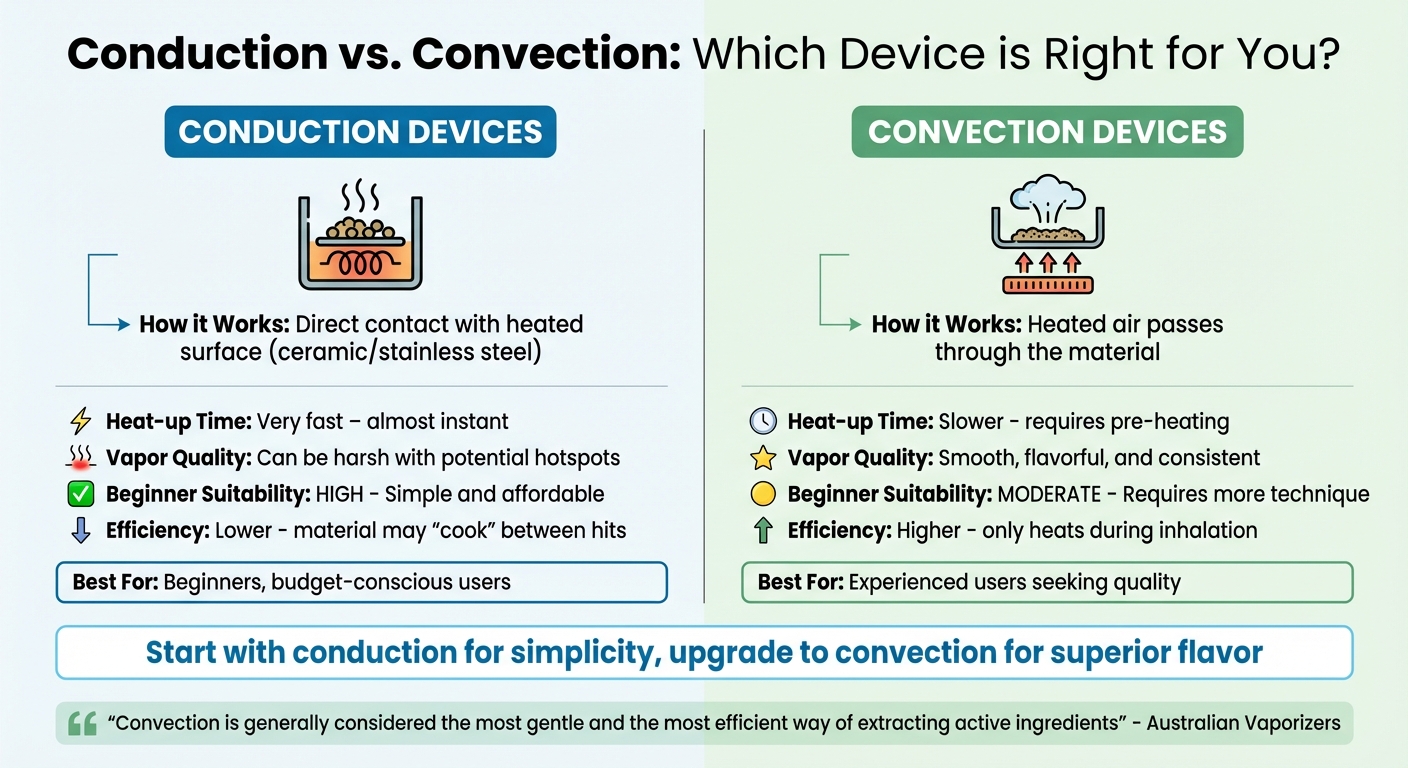
Conduction vs Convection Essential Oil Vaporizers Comparison Chart
Conduction vs. Convection Devices
Understanding how conduction and convection heating work can help you pick a device that matches your preferences. Conduction devices heat essential oils by direct contact with a heated surface, often made of ceramic or stainless steel. These devices are quick, straightforward, and affordable, making them a great choice for beginners. On the other hand, convection devices use heated air to warm the oil, resulting in more even heating and better flavor preservation. As Australian Vaporizers explains:
"Convection is generally considered the most gentle and the most efficient way of extracting active ingredients from your herb due to the steady and consistent application of heat."
However, convection devices come with a trade-off. They take longer to heat up and may require a bit more skill to use effectively. Here’s a quick comparison to help you decide:
| Feature | Conduction | Convection |
|---|---|---|
| How it Works | Direct contact with a heated surface | Heated air passes through the material |
| Heat-up Time | Very fast; almost instant | Slower; requires pre-heating |
| Vapor Quality | Can be harsh with potential hotspots | Smooth, flavorful, and consistent |
| Beginner Suitability | High – simple and affordable | Moderate – requires more technique |
| Efficiency | Lower – material may "cook" between hits | Higher – only heats during inhalation |
If you’re just starting out, conduction devices offer a simpler and budget-friendly entry point. Once you’re comfortable, you can explore convection devices for a smoother, more refined experience.
Key Features to Consider
When choosing your first device, focus on safety and simplicity. Temperature control is crucial – keeping the temperature between 300°F and 350°F ensures you preserve the essential compounds in your oils without burning them. As DaVinci Vaporizer highlights:
"Lower temperatures (around 325–350°F) bring out flavor and are ideal for beginners."
Start with the lowest voltage (around 2.8V or 325°F) and adjust upward only if necessary.
Material quality is another important factor. Avoid devices with plastic vapor paths, as they can degrade over time and impact the flavor. Michael Mussner, Founder of INHALE Vaporizers, advises:
"Avoid plastic vapor paths – they degrade over time and affect taste. Look for stainless steel, wood, copper, mica."
Opt for devices made from medical-grade stainless steel, ceramic, or glass to ensure both safety and purity. For reference, glass has a melting point between 1,400°C and 1,600°C – far above any vaping temperature.
Other features to look for include automatic shut-off for safety, preheating functions to prevent clogs, and compatibility with standard 510-thread cartridges. Devices with USB-C charging are more convenient, and ceramic heating elements are preferable to metal coils, as they reduce the risk of burnt residues. Finally, a high-quality lithium-ion battery, typically lasting 300 to 500 charge cycles, can make your investment last longer.
Selecting and Preparing Essential Oils
How to Choose Safe Essential Oils
When it comes to essential oils, purity is key. Always opt for 100% pure essential oils and steer clear of products labeled as "fragrance oils" or "perfume oils." These are synthetic and can irritate your respiratory system. Dr. Susan Chiarito, a Family Physician with the American Academy of Family Physicians, emphasizes the risks:
"Essential oils are a volatile organic compound (VOC) that when heated over 150 to 180° Fahrenheit can convert to abnormal compounds that can be damaging to our lungs, mouth, teeth, and nose."
To ensure quality, check the label for details like the botanical name (e.g., Rosmarinus officinalis for rosemary), the plant part used, and the country of origin. Trustworthy suppliers often provide GC/MS testing reports to confirm the oil’s purity and chemical composition. Choosing certified organic or wildcrafted oils helps reduce the risk of pesticide residues, which can become concentrated during distillation. Look for retailers who are members of professional organizations like NAHA and employ trained aromatherapists.
Price can also be a clue. For example, authentic rose oil requires approximately 250 pounds of blossoms to produce just one ounce (30 mL). If you see rare oils like rose or sandalwood at a suspiciously low price, they are likely synthetic or adulterated. Also, avoid using citrus oils like lemon or bergamot in vaping devices. These contain limonene, which can react with heat to form formaldehyde, a known carcinogen. Similarly, high-phenol oils such as cinnamon, oregano, clove, and thyme should be avoided, as they can irritate the respiratory tract.
Once you’ve chosen safe oils, proper dilution is the next critical step.
Diluting Essential Oils
Dilution is essential for both safety and maintaining the therapeutic properties of essential oils. Since essential oils are oil-soluble and VG/PG bases are water-soluble, they don’t mix naturally. Using undiluted oils in a vape device can lead to inhaling concentrated oil droplets, which is harmful to your lungs. Never use traditional carrier oils like coconut, almond, or olive oil in a vape device, as inhaling fatty substances can cause lipoid pneumonia.
Bella Martinez, a Certified Aromatherapist at Edens Garden, warns:
"Heating essential oils above their flash points will not only lessen their therapeutic benefits, but will also make a device that’s already susceptible to ignition, even more dangerous."
For safe dilution, use a 1% ratio – roughly 4 drops of essential oil for every 15 mL of VG/PG base. The VG/PG blend you choose will affect the vaping experience:
- A 70% VG / 30% PG mix produces thick vapor clouds with a smoother throat hit.
- A 50/50 ratio balances flavor and vapor production.
- A 30% VG / 70% PG mix delivers intense flavor but may feel harsher on the throat.
When mixing, do so at room temperature to minimize volatilization. After filling cartridges, let them sit upright for 24–48 hours to allow the wick to fully absorb the liquid. Store your blends in dark glass bottles, in a cool, dark place, to prevent degradation.
Step-by-Step Guide for Beginners
Setting Up Your Device
Start by fully charging your device using the included USB or 510-thread charger. A full charge ensures consistent heat and vapor quality. Before using the device, perform a "burn off." This means turning it on and holding the heating button for a few minutes without any oil. This step helps remove any leftover manufacturing residues, dust, or oils inside the device.
When attaching the cartridge, screw it into the battery finger-tight. Be cautious – over-tightening can damage the threading. If the device doesn’t respond, try loosening the cartridge by a quarter-turn to improve the electrical connection. After attaching the cartridge, wait about 10 minutes. This allows the oil to fully saturate the ceramic core or wick, preventing a burnt taste and potential damage to the heating element.
If your device has a preheat function, use it to reduce the oil’s viscosity and help the wick absorb the oil more effectively. Set your device to a temperature range of 300°F–350°F to maintain the quality of the oil. For devices with variable voltage, start at the lowest setting (around 2.8V to 3.3V). Gradually increase the voltage only if necessary. Once your device is properly calibrated, you’re ready to move on to vaping safely.
Safe Vaping Techniques
With your device set up, follow these steps to ensure a safe and enjoyable vaping experience. Take slow, steady draws lasting 3–5 seconds. Hamilton Devices advises:
"Use slow and steady air pressure to prevent gurgling and leaking. When your vape pen’s light turns on, that’s all the air pressure you need to use".
Avoid using too much force when drawing, as this can flood the coil and lead to leaks or gurgling.
Give your device at least 30 seconds between puffs. This cooling period allows the heating element to rest and gives the wick time to re-saturate with oil. Limit yourself to 1–2 short puffs per session, and try to stick to no more than three sessions per week. When you’re done, turn off the device and store it upright in a cool, dark place. This prevents oil from leaking into the airflow path or clogging the mouthpiece.
To keep your device in good condition, clean the 510-thread connections weekly. Use a cotton swab dipped in rubbing alcohol to remove any residue and maintain a solid electrical connection.
Best Essential Oils for Beginners
If you’re just starting with essential oil vaping, it’s smart to begin with oils that are known for their wellness benefits and are gentle on the body. These beginner-friendly oils work best at temperatures between 300°F and 350°F. To get the most out of them, make sure to follow the earlier tips on best essential oil vapes setup and safe vaping practices. Below is a quick guide to the benefits and ideal temperature ranges for each oil.
Lavender for Relaxation
Lavender (Lavandula angustifolia) is a great choice if you’re looking to unwind. Its key compound, linalool, is believed to help calm the nervous system and is often used for reducing stress, easing anxiety, and encouraging better sleep. To preserve its soothing properties, vape lavender at 300°F–320°F. Avoid going above 320°F, as higher temperatures can diminish its calming effects.
Peppermint for Energy
Need a pick-me-up? Peppermint (Mentha piperita) is packed with menthol, giving it a refreshing and energizing kick. It’s known to help clear mental fog and sharpen focus. The ideal temperature range for peppermint is 320°F–350°F. Start at 320°F and adjust upward gradually if you’re seeking a stronger effect. Take slow, steady draws to avoid overwhelming your senses.
Eucalyptus for Respiratory Support
Eucalyptus is a go-to for supporting respiratory health and clearing airways. Its active ingredient, cineole (1,8-cineole), makes it effective but also calls for caution, as it may cause adverse reactions in sensitive individuals. Stick to temperatures below 320°F, starting at around 300°F, and take only minimal puffs. If you have any respiratory conditions, it’s wise to consult a healthcare professional before use.
| Essential Oil | Wellness Benefit | Recommended Temperature |
|---|---|---|
| Lavender | Relaxation, Anxiety Relief, Sleep | 300°F–320°F |
| Peppermint | Energy, Focus, Mental Clarity | 320°F–350°F |
| Eucalyptus | Respiratory Support, Clearing Airways | Below 320°F |
To get the best results, always match your vaping temperature to the recommended range for each oil. This ensures you enjoy their benefits safely and effectively.
Safety Tips and Best Practices
Never vape undiluted essential oils. Essential oils must always be diluted with carrier liquids to prevent lung irritation and respiratory issues. A common mix includes 75% pharmaceutical-grade vegetable glycerin and 20% distilled water, with essential oils making up only 1% to 5% of the blend.
Temperature control is equally important. Keep heating levels below 150°F–180°F to avoid breaking down oils and releasing harmful volatile organic compounds (VOCs). Exceeding this range can lead to the formation of these toxic substances. To put this into perspective, nicotine vape devices often reach temperatures as high as 800°F to 1,200°F, which is far too hot for essential oils.
"Never try vaping coconut oil, olive oil, or any other fatty oils like that, in any amount. Fatty oils should never be vaped." – VitaStik Laboratories
When vaping, take short, infrequent puffs. Limit each puff to 2–4 seconds and keep daily usage to 5–20 activations. If you experience any respiratory discomfort, stop immediately and move to fresh air. Additionally, only use steam-distilled, edible-grade essential oils. Avoid expressed citrus oils or synthetic fragrances, as these can release harmful toxins when heated.
Common Mistakes to Avoid
To stay safe, steer clear of these common errors. Many beginners mistakenly use standard nicotine vape devices, which operate at dangerously high temperatures unsuitable for essential oils. Always choose devices specifically designed for aromatherapy, as these maintain the low heat settings required.
Another serious mistake is attempting to vape fatty oils like coconut oil or olive oil. Doing so can lead to lipoid pneumonia, a severe and potentially life-threatening lung condition. Ensure your essential oils are steam-distilled and pure before use.
Overfilling the heating chamber is another pitfall. This can block airflow and lead to overheating. Stick to the recommended oil amount, and don’t leave oil sitting in your device for extended periods – it can degrade over time. If you notice a burnt or stale flavor, reduced vapor production, or dark residue buildup, it’s time to clean your device.
Device Maintenance
Proper maintenance is key to keeping your device in good working order. After every session, perform a quick clean by brushing out the chamber while it’s still warm. For a deeper clean, disassemble the non-electronic parts every 1–2 weeks. Soak these parts in 91% or higher isopropyl alcohol for 30–60 minutes, scrub with cotton swabs, rinse with warm water, and let them air dry for 12–24 hours. Never reassemble the device while parts are wet, and avoid submerging electronic components in any liquid.
Battery care is just as important. Use the charger provided by the manufacturer and keep the battery charge between 20% and 80% for optimal performance. Store your device upright in a cool, dark, and dry place, and keep essential oils in dark glass bottles away from sunlight. Be mindful of extreme temperatures – leaving your device in a hot car, for example, can reduce battery capacity by up to 40%. After cleaning, always test your device to ensure it’s functioning properly.
| Component | Maintenance Action | Frequency |
|---|---|---|
| Mouthpiece | Wipe with isopropyl alcohol swab | After every use |
| Heating Chamber | Brush out debris; wipe with ISO swab | After every use |
| Screens/Filters | Soak in isopropyl alcohol; replace if worn | Every 1–2 weeks |
| Battery Contacts | Wipe with a dry cotton swab | Weekly |
Conclusion
Essential oil vaping offers a portable way to enjoy aromatherapy through low-temperature devices. By selecting tools specifically designed for this purpose, you can experience the soothing scent of lavender, the invigorating aroma of peppermint, or the respiratory benefits of eucalyptus – without the risks tied to high-heat nicotine-based devices. This approach emphasizes mindful breathing and sensory engagement, focusing on shallow inhalation rather than deep lung intake. These principles encourage a more intentional and calming practice.
Safety comes first. Stick to certified, steam-distilled essential oils and follow proper dilution guidelines. Limit your sessions to 1–2 short puffs, no more than three times a week, to minimize the risk of sensory adaptation or respiratory irritation. Avoid heating oils above 150°F to 180°F, as higher temperatures can degrade the oils into potentially harmful substances.
When selecting a device, look for models made from medical-grade materials and ensure regular maintenance. Devices with convection heating are often preferred, as they help preserve flavor and ensure even oil extraction. Choosing the right device not only enhances safety but also improves your overall aromatherapy experience.
Think of essential oil vaping as a wellness ritual. The goal is to create a brief, intentional breathing practice centered on scents that promote emotional balance. Whether you need a quick moment of calm during a busy day or a soothing ritual before bed, using this practice sparingly and thoughtfully can support your overall well-being. If you have asthma, COPD, or other respiratory conditions, consult your healthcare provider before trying this method.
FAQs
Can I vape essential oils in a regular vape pen?
Vaping essential oils in a regular vape pen isn’t a good idea. Most vape pens are made for nicotine or concentrates, not essential oils. When heated, essential oils can release harmful compounds, posing potential risks. Plus, the health effects of inhaling essential oils through vaping are still unclear. To stay safe, stick to devices and products specifically designed for essential oil use.
What are the safest essential oils to vape?
Some essential oils often mentioned as safer options for vaping include eucalyptus, peppermint, and tea tree oil, primarily because of their well-known properties. However, it’s crucial to emphasize that vaping essential oils comes with potential health risks.
If you decide to try this, make sure to use high-quality, natural, and organic oils to minimize exposure to harmful additives. Still, the safety of inhaling essential oils isn’t fully understood, and more research is needed in this area. Always proceed with caution and consult a healthcare professional if you have concerns.
How do I know if I’m vaping at too high a temperature?
Vaping at excessively high temperatures can lead to an unpleasant, burnt flavor or produce dense, harsh vapor. This might mean combustion is taking place, which can release harmful chemicals and irritate your lungs. To avoid these issues, stick to your device’s recommended temperature range – generally below 400°F (204°C). Maintaining proper temperature settings not only ensures safer vaporization but also helps prevent essential oils or compounds from breaking down into harmful byproducts.
Related Blog Posts
- How to Quit Nicotine Using Herbal Vapes
- 5 Best Caffeine Vapes for Energy in 2026
- Vitamin Vapes vs Traditional Supplements: Which Works Better?
- Checklist: Choosing Your First Nicotine-Free Vape
Related: Are Nicotine-Free Vapes Safe