
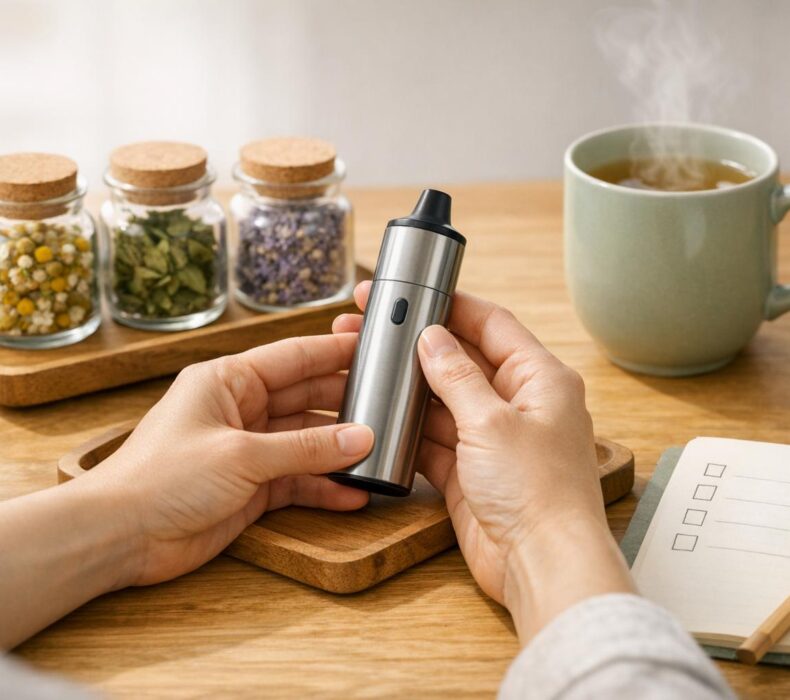
Quitting nicotine is tough, but essential oil vapes offer a nicotine-free alternative to help manage cravings and habits. Unlike nicotine replacement therapies, herbal vapes use botanical ingredients like mullein, peppermint, and lavender to address withdrawal symptoms while mimicking the physical act of vaping. They can help with lung health, relaxation, and reducing cravings, making the transition easier. Here’s how you can quit nicotine with herbal vapes:
- Understand Your Triggers: Identify when and why you use nicotine to prepare for challenges.
- Set Goals: Write down your reasons for quitting and share your plans with supportive friends or family.
- Choose the Best Essential Oil Vapes: Use herbs like mullein for lung support, peppermint for cravings, and lavender for relaxation.
- Transition Gradually: Replace nicotine sessions with herbal vaping over 1–2 weeks to ease withdrawal.
- Track Progress: Log your nicotine-free days and adjust your strategy as needed.
Herbal vapes can help you break free from nicotine by addressing both physical and psychological dependencies. Start small, stay consistent, and remember that even small steps bring you closer to a nicotine-free life.
Step 1: Get Ready to Quit Nicotine
Before making the switch, take some time to understand your nicotine habits. This will help you prepare for the journey ahead.
Check Your Readiness to Quit
Start by examining how nicotine fits into your daily life. Are there certain times or situations when you find yourself reaching for it? Withdrawal symptoms like cravings, irritability, trouble focusing, headaches, or nausea can also give you clues about your dependence.
To pinpoint your triggers, consider taking an online assessment at Smokefree.gov. Pay attention to moments when you vape – whether it’s due to stress, boredom, or social settings.
Choose a quit date within the next week or two, and test yourself with a short nicotine break lasting 24–48 hours. This can help you identify the situations that challenge you the most. Don’t forget to remove all nicotine products from your surroundings to eliminate temptation.
Once you’ve mapped out your habits and triggers, you’ll have a clearer picture of what a nicotine-free life could look like.
Set Clear Goals for Going Nicotine-Free
Define your personal reasons for quitting. Whether it’s about improving your health, saving money, or avoiding the stress of withdrawal, write these motivations down. Having a list of clear goals can help you stay focused when cravings hit. Keep this list where you’ll see it often – on your phone, your fridge, or somewhere else you look daily.
"Knowing our why can help us change any pattern or habit. Being clear on why we’re changing behavior helps validate the decision to break that habit and gives us the motivation to discover a new habit or way of coping." – Kim Egel, Therapist
Finally, tell your friends and family about your quit date. Their support can make a big difference, especially during the toughest days of withdrawal.
sbb-itb-364f168
Step 2: Select the Right Herbal Vape Blends
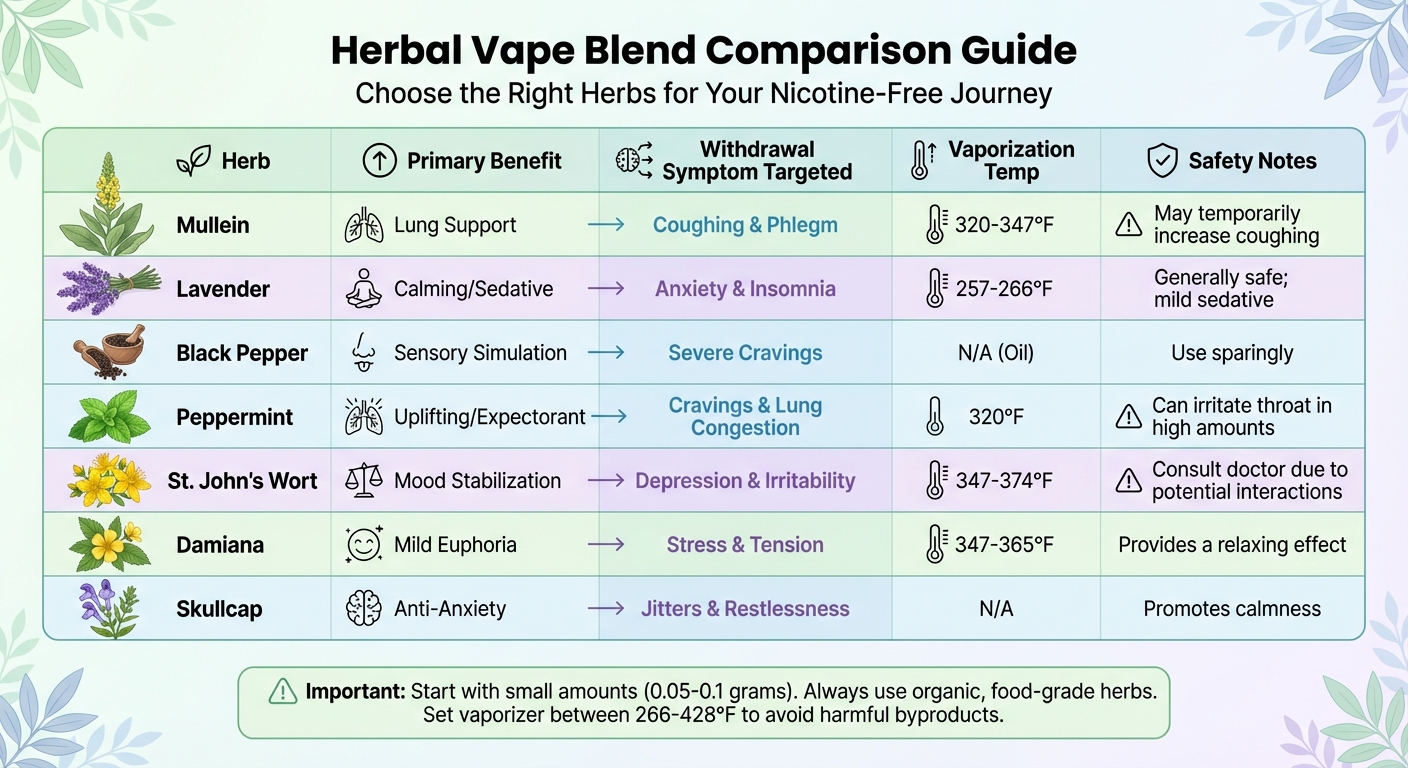
Herbal Vape Blends for Nicotine Withdrawal: Benefits and Usage Guide
Once you’ve decided to quit nicotine, the next step is choosing herbal blends that address your specific withdrawal symptoms. Each herb offers unique benefits, so understanding their properties can help you create a mix that meets your needs. Here’s a guide to help you select herbs tailored to your quit-smoking journey.
Best Herbs for Nicotine-Free Vaping
Mullein is an excellent base herb, making up about 40-50% of your blend. It supports lung health by acting as an expectorant, which helps clear mucus as your lungs recover from smoking. This can ease some of the physical discomfort of quitting nicotine. Think of it as the foundation of any vapor blend.
If you’re battling intense cravings, black pepper essential oil can be a game-changer. Inhaling its vapor can reduce nicotine cravings and even mimic the throat sensation of smoking, helping to calm anxiety. For relaxation and better sleep, lavender is a great option. It’s known for its calming effects, which can help manage the anxiety and restlessness that often accompany nicotine withdrawal. Peppermint also works wonders by clearing your lungs and opening airways. Interestingly, its scent alone has been shown to interrupt smoking habits and reduce cravings.
If mood swings or irritability hit hard during detox, St. John’s Wort can help stabilize your mood and manage mild depression. However, it’s crucial to consult your doctor before using it, as it can interact with medications like birth control or antidepressants. For physical cravings, lobelia is an option. It contains lobeline, which binds to the same brain receptors as nicotine, potentially helping to curb cravings. Lastly, skullcap is known to calm the nervous system by stimulating GABA receptors, making it helpful for managing withdrawal jitters.
"The main appeal of natural alternatives stems from their potential to break the cycle of nicotine dependence entirely rather than substituting one form of nicotine consumption for another." – BRST Nicotine Blog
Herbal Vape Blend Comparison
Here’s a quick comparison of the herbs to help you decide. Always set your vaporizer between 266-428°F to avoid harmful byproducts like tar or carbon monoxide.
| Herb | Primary Benefit | Withdrawal Symptom Targeted | Vaporization Temp | Safety Notes |
|---|---|---|---|---|
| Mullein | Lung Support | Coughing & Phlegm | 320-347°F | May temporarily increase coughing |
| Lavender | Calming/Sedative | Anxiety & Insomnia | 257-266°F | Generally safe; mild sedative |
| Black Pepper | Sensory Simulation | Severe Cravings | N/A (Oil) | Use sparingly |
| Peppermint | Uplifting/Expectorant | Cravings & Lung Congestion | 320°F | Can irritate throat in high amounts |
| St. John’s Wort | Mood Stabilization | Depression & Irritability | 347-374°F | Consult doctor due to potential interactions |
| Damiana | Mild Euphoria | Stress & Tension | 347-365°F | Provides a relaxing effect |
| Skullcap | Anti-Anxiety | Jitters & Restlessness | N/A | Promotes calmness |
Start with small amounts (0.05-0.1 grams) to see how your body reacts before a full session. Always use organic, food-grade herbs to avoid exposure to pesticides. And remember, just because something is "natural" doesn’t mean it’s automatically safe – research any potential interactions with medications you’re taking.
Step 3: Switch from Nicotine to Herbal Vapes
Build a Gradual Transition Plan
While quitting cold turkey works for some people, it can feel overwhelming for others. A gradual switch over 1–2 weeks offers a more manageable approach. The idea is to systematically replace nicotine sessions with herbal vaping, giving your body time to adjust.
Start by identifying one nicotine session to swap out – like your mid-morning break. Replace that session with an herbal vape blend while keeping your other nicotine habits unchanged. Stick with this for 2–3 days, then replace a second session. Another method is to gradually increase the time between nicotine hits. For example, if you vape every 20 minutes, stretch it to 40 minutes and use your herbal vape during the gaps. You can also create nicotine-free zones, such as your bedroom or car, where only herbal vapes are allowed. As you progress, expand these zones. This step-by-step approach helps reduce withdrawal symptoms without overwhelming your system.
For those using nicotine e-liquids, try lowering the nicotine strength every 1–2 weeks. If you notice you’re vaping more frequently after a reduction, stick with your current level a bit longer until you’re ready to cut back again.
Track Your Progress and Adjust as Needed
Once you begin the transition, keeping track of your progress is crucial. Record your daily sessions in a simple log, noting how many involve nicotine versus herbal vaping. Withdrawal symptoms often peak within a few days and ease after a couple of weeks. Seeing your progress on paper can reassure you that you’re moving through the hardest part.
Pay close attention to your habits and triggers. If you find yourself reaching for nicotine during stressful moments or social situations, plan to use your herbal vape instead. You can also use a savings calculator to see the financial benefits of cutting back. And if you slip up, don’t be discouraged. Dr. Humberto Choi, a pulmonologist, offers this reminder:
"Quitting is a process. Nicotine is highly addictive. It may take you a few attempts, and that’s OK. Try again. And don’t hesitate to reach out for help".
Stay flexible with your plan, make adjustments as needed, and keep moving forward. Progress is progress, no matter how small.
Step 4: Handle Cravings and Withdrawal Symptoms
Use Herbal Vapes When Cravings Hit
When cravings strike, grabbing your herbal vape can help satisfy the hand-to-mouth habit that your brain links to comfort and relief. This action provides a sensory experience that addresses the psychological aspects of nicotine dependence, such as the oral fixation and the familiar throat sensation.
Certain blends, like black pepper essential oil, can effectively curb cravings and reduce anxiety by mimicking the "throat hit" of a cigarette. Similarly, menthol-based options like peppermint or wintergreen can help with oral fixation while potentially soothing respiratory discomfort. Keep your herbal vape within reach and use it as soon as the urge arises to stay on track.
Combining herbal vaping with other healthy practices can further ease the challenges of cravings and withdrawal.
Add Healthy Habits to Your Routine
Pairing herbal vaping with simple, healthy habits can make the transition smoother. Staying hydrated throughout the day can alleviate withdrawal-related symptoms like hunger, fatigue, and headaches. When cravings hit, try the "Pause to Breathe" technique – take a slow inhale through your nose and exhale through your mouth ten times. Alternatively, a short walk or munching on crunchy snacks like carrots or raw nuts can help redirect your focus. To manage irritability and mood swings, aim for a consistent bedtime and limit screen time before sleeping.
| Withdrawal Symptom | Recommended Healthy Habit |
|---|---|
| Intense Cravings | Herbal vaping, deep breathing, or short exercise |
| Oral Fixation | Crunchy snacks (carrots, nuts), straws, or toothpicks |
| Irritability/Anxiety | Mindfulness, yoga, or aromatherapy (lavender/rosemary) |
| Fatigue | Drinking water and consistent sleep |
| Hunger/Weight Gain | Healthy snacking and water before meals |
Step 5: Build a Long-Term Herbal Vaping Routine
Create a Regular Vaping Schedule
Now that you’ve embraced herbal vapes, it’s time to weave them into your daily life as part of a lasting routine. Start by setting up a consistent schedule to shift fully from nicotine to botanical rituals. Match specific herbs to your daily needs – opt for energizing options like peppermint (320°F) or green tea (347–365°F) in the morning, and choose relaxing ones like lavender (266°F) or chamomile (374°F) in the evening. As your body adjusts to life without nicotine, gradually space out your sessions. For instance, if you’re vaping every 20 minutes, stretch that to 40 minutes, then to an hour, and so on. This gradual shift not only helps you manage cravings but also reinforces the progress you’ve made toward a nicotine-free lifestyle.
"Vaporizing herbs is about resonance, not intensity. Take it slow and discover the vast potential of herbal vaporization." – Michael Mussner, Founder, INHALE Vaporizers
To strengthen your routine, establish vape-free zones in places like your bedroom, car, or workplace. This helps break old habits tied to specific environments. Also, don’t forget to maintain your device – clean the bowl and vapor path every 5–10 uses to keep flavors fresh and prevent buildup.
Check Your Progress at Key Milestones
Once your schedule is in place, track your progress at regular intervals to fine-tune your approach. Set milestones at 8, 12, and 24 weeks to assess how you’re doing and make adjustments as needed. By the 8-week mark, check if physical withdrawal symptoms like irritability or headaches have eased. At 12 weeks, you might expand your vape-free zones to include more areas of your daily life. By 24 weeks, evaluate whether your herbal routine is still helping you meet your wellness goals or if it’s time to cut back on vaping even more. Using a calendar to mark nicotine-free days can serve as a powerful visual motivator and a reminder of how far you’ve come.
Remember, long-term routines require flexibility. If you face setbacks, don’t see them as failures. Instead, treat them as opportunities to learn. As Dr. Humberto Choi from Cleveland Clinic explains:
"Quitting is a process… It may take you a few attempts, and that’s OK"
If you slip up, recommit right away and adjust your strategy based on what caused the challenge. Keep refining your approach as you work toward fully integrating herbal vaping into your lifestyle.
Conclusion
Breaking free from nicotine is a journey that involves both physical and behavioral changes. By following five steps – preparing mentally, selecting the right herbal blends, transitioning gradually, managing cravings, and building a lasting routine – you can tackle both the chemical addiction and the habits tied to it.
The benefits of quitting begin almost immediately. Within just 20 minutes of your last nicotine use, your body starts to recover. Over time, lung function can improve by up to 10%. Quitting nicotine also reduces your exposure to the thousands of harmful substances found in traditional tobacco products.
Remember, success doesn’t mean being perfect. Therapist Kim Egel emphasizes the importance of understanding your personal motivation:
"Knowing our why can help us change any pattern or habit. Being clear on why we’re changing behavior helps validate the decision to break that habit and gives us the motivation to discover a new habit or way of coping".
Your reasons for quitting will be your anchor during challenging moments. Let them guide you as you build healthier habits and routines.
Consistency is key. A 2016 study involving 697 smokers found that those who quit "cold turkey" had higher success rates at 4 weeks, 8 weeks, and even 6 months compared to those who quit gradually. Whether you choose an abrupt or gradual approach, the most important thing is to recommit after any setbacks.
Herbal vapes can serve as a temporary tool to help break free from nicotine. Use them as part of your transition, but aim to gradually reduce vaping as you develop healthier coping mechanisms. Ultimately, the goal is to eliminate all inhalation habits and embrace a nicotine-free lifestyle. Each step you take brings you closer to that freedom.
FAQs
How can herbal vapes help ease nicotine withdrawal symptoms?
Herbal vapes offer a natural, nicotine-free option that can help ease the challenge of nicotine withdrawal. They replicate the physical sensation of vaping, which can make the shift away from nicotine feel more manageable by maintaining a familiar habit without the addictive element.
Some herbal blends are crafted to encourage relaxation, alleviate stress, and support a sense of calm. By targeting common withdrawal symptoms like irritability and restlessness, these vapes can be a useful aid for anyone looking to step into a nicotine-free lifestyle.
Are herbal vapes safe to use?
Herbal vapes are often seen as a less harmful alternative to smoking or nicotine vaping. Instead of burning herbs, which creates harmful smoke, these devices heat the herbs to release their active compounds, avoiding combustion. But while they may seem like a healthier choice, there are a few precautions to keep in mind.
The quality and purity of the herbs you use are critical. Herbs that are low-quality or contaminated can introduce harmful substances into the vapor. Another factor to watch is the device temperature – overheating can lead to the release of unwanted chemicals or particulates, which could reduce the benefits of vaping.
Even though herbal vapes don’t involve nicotine or tobacco, inhaling any kind of vapor carries potential risks. For instance, some people may experience lung irritation or allergic reactions to specific herbs. And because long-term research on herbal vaping is still limited, it’s wise to approach with care.
To minimize risks, stick to high-quality, pure herbs and consult a healthcare professional, especially if you have respiratory issues or other health concerns. Your well-being should always come first when exploring alternatives like herbal vaping.
What are the best herbs to help curb nicotine cravings?
Certain herbs are well-known for their calming and stress-relieving effects, making them excellent allies when managing nicotine cravings. Peppermint, with its refreshing flavor, is a favorite because it not only promotes relaxation but also helps ease stress – something many face during the quitting process. Another herb worth mentioning is lobelia, often suggested because it may mimic some of nicotine’s effects, offering a natural way to alleviate withdrawal symptoms.
Additional options include valerian, celebrated for its soothing properties, and passionflower, which is thought to help with anxiety. Herbs like ginger and peppermint can also provide relief for the respiratory system, which may need extra care during this time. These herbs can be enjoyed as teas or through herbal vapes, offering a natural, supportive boost on your path to a nicotine-free life.
Related Blog Posts
- 5 Best Caffeine Vapes for Energy in 2026
- Best Melatonin Vape Brands in 2026
- Can’t Sleep? How Melatonin Vapes Can Help
- Caffeine Vaping vs Energy Drinks: Health Pros and Cons
Related: How To Quit Vaping