
Melatonin vapes claim to offer a fast-acting solution for sleep by delivering melatonin through inhalation. Unlike oral supplements, which take time to work, these devices promise near-instant effects by bypassing the digestive system. But are they safe or effective? Here’s the key takeaway:
- No clinical evidence supports the safety or effectiveness of melatonin vapes for sleep.
- Vaping melatonin can lead to plasma levels 645 times higher than natural levels, raising risks like headaches, nausea, and grogginess.
- Ingredients in vape liquids, such as propylene glycol and flavorings, may release toxic chemicals when heated, harming lung health.
- Dosing is inconsistent, making it hard to control how much melatonin you actually absorb.
- FDA regulation is lacking, and some products contain unlisted contaminants.
Safer alternatives include oral or sublingual melatonin, which are well-researched and allow for precise dosing. For long-term sleep improvement, lifestyle changes like better sleep hygiene are recommended. Avoid melatonin vapes – they pose more risks than benefits.
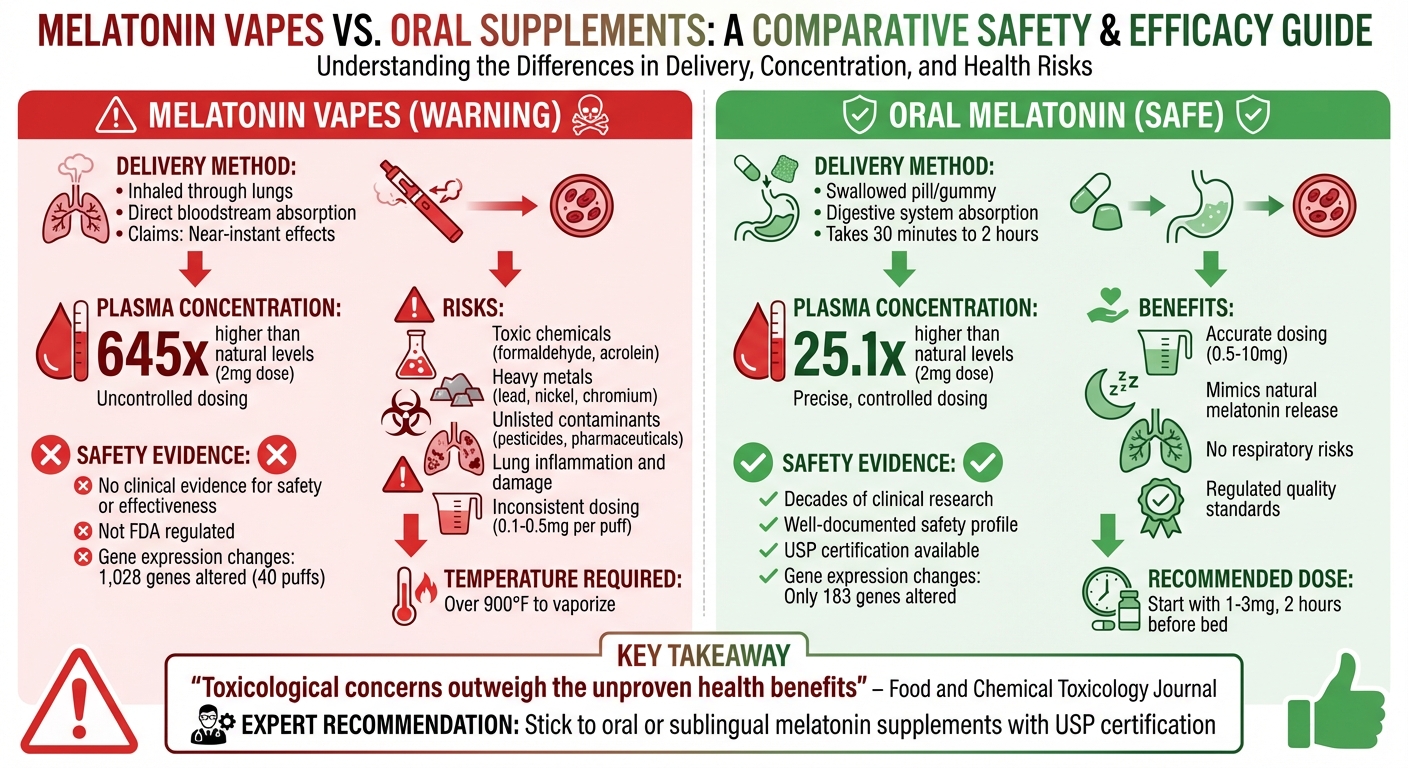
Melatonin Vapes vs Oral Supplements: Safety and Effectiveness Comparison
Report finds melatonin led to thousands of ER visits
sbb-itb-364f168
How Melatonin Vapes Work
Let’s take a closer look at how melatonin vapes function and how they compare to traditional oral supplements.
Melatonin Delivery Through Vaping
Melatonin vapes work by heating a liquid solution of melatonin, mixed with solvents like propylene glycol and vegetable glycerin, along with flavor additives, into an aerosol that can be inhaled. Once inhaled, the melatonin is absorbed directly into the bloodstream through the alveoli in the lungs, bypassing the digestive system entirely. This direct absorption allows for faster effects compared to oral supplements. Most commercially available melatonin vapes deliver between 0.1 mg and 0.5 mg of melatonin per puff.
Oral Melatonin Supplements vs. Vapes
Traditional melatonin pills take a slower route. They must pass through the digestive system and undergo first-pass metabolism in the liver, which delays their effects by one to two hours. In contrast, melatonin vapes aim to provide almost immediate absorption. Daniel Wolf Shapiro, CEO of InhaleHealth, explains:
Less melatonin is necessary to take effect as it’s instantly absorbed, allowing consumers to use as they go, and take only what they need.
Pharmacokinetics further highlight the difference: a 2 mg dose of inhaled melatonin can lead to plasma concentrations up to 645 times higher than natural levels, compared to just 25.1 times higher for an equivalent oral dose. This stark contrast raises questions about whether vaping is a more efficient delivery method.
Questions About Absorption Effectiveness
Despite claims of faster absorption, experts remain cautious about the effectiveness of melatonin vapes. One key issue is the size of melatonin molecules. Unlike nicotine, melatonin is a much larger compound, which could impact its ability to be efficiently absorbed through vaping. Dr. Philip Forys, a pulmonologist at Indiana University, notes:
Melatonin is a large chemical compound, unlike nicotine and other commonly vaped substances. While it’s possible this product may work, we really don’t know if this is an efficient delivery mechanism.
Another challenge is the high vaporization temperature of melatonin. It requires temperatures above 900°F to vaporize – more than double the temperature needed for substances like CBD or THC. According to Carolina Vazquez Mitchell, Chief Scientific Officer at Dreamt, this high boiling point means melatonin might not fully vaporize. Instead, it could be carried in the vapor and absorbed in the upper respiratory tract before reaching the lungs.
Currently, these claims remain speculative. No human clinical trials have directly compared the effectiveness of inhaled melatonin to oral supplements, leaving the supposed benefits of vaping unproven.
Benefits and Limitations of Melatonin Vapes
Understanding the upsides and downsides of melatonin vapes is crucial when comparing them to traditional sleep aids. Manufacturers promote this method as a fast-acting alternative, but there’s more to consider.
Claimed Benefits
One of the biggest selling points of melatonin vapes is their supposed speed. Companies claim that inhaling melatonin allows it to enter the bloodstream almost instantly through the lungs, bypassing the wait time of 30 minutes to 2 hours often associated with oral supplements. This "on-demand" sleep solution appeals to those who want immediate relief from sleeplessness.
The convenience factor is another draw. For people who dislike swallowing pills, these devices offer a seemingly easier option. Many products also come in enticing flavors like Peach Cream, Cotton Candy, or mint, making them more enjoyable to use. Some brands even mix melatonin with ingredients like lavender or chamomile, suggesting additional relaxation or anxiety relief benefits. However, it’s important to note that such claims lack direct clinical validation.
Missing Clinical Research
Here’s the catch: there’s no direct clinical evidence proving that inhaling melatonin is safe or effective for humans. Most research cited by manufacturers focuses on oral melatonin supplements, which operate differently from vaping.
The Food and Chemical Toxicology Journal has raised concerns, stating, "Toxicological concerns outweigh the unproven health benefits of these products". Without thorough human trials, it’s unclear whether melatonin vapes deliver as advertised – or what risks they might pose over time. Dr. Alcibiades Rodriguez, an assistant professor at NYU Grossman School of Medicine, emphasizes the uncertainty:
It is too early to tell yet. I think I would like to see some safety data.
Practical Concerns
Even beyond the lack of clinical backing, there are practical challenges with melatonin vapes. One major issue is dosing. Unlike pills, which provide a fixed amount (e.g., 3 mg or 5 mg), the dose delivered by vaping depends on how deeply and how often a person inhales. Marc Sala, an assistant professor of medicine at Northwestern University, explains:
Vaping is a far less accurate way of trying to dose medication.
For example, some products claim to deliver about 0.5 mg of melatonin per puff, with recommendations for seven puffs per night to total 3.5 mg. However, there’s no reliable way to confirm you’re getting the intended dose. A 2017 study found that melatonin content in supplements varied widely, ranging from 83% less to 478% more than what was listed on the label. Since melatonin vapes aren’t regulated by the FDA for safety or quality, similar inconsistencies are likely.
Dr. Michael Grandler, director of the Sleep and Health Research Program at the University of Arizona, highlights the difficulty in managing doses:
The dose of melatonin is very tricky to get right, and most people use more than is optimal. I am not sure if [vaping] allows for tight control over the dose.
Another complication is the high temperatures required to vaporize melatonin effectively. Melatonin needs to be heated to over 900°F, much higher than other substances commonly vaped. This makes consistent and efficient delivery even harder to achieve.
Safety and Health Considerations
Melatonin vapes come with serious health risks that extend far beyond questions about their effectiveness. Unlike traditional oral supplements, inhaling substances directly into the lungs introduces unique dangers.
Effects on Lung Health
Research from the University of North Carolina at Chapel Hill highlights troubling impacts on respiratory health. A study published in Chemical Research in Toxicology (November 2024) examined how melatonin vape aerosols affected human bronchial epithelial cells. The findings were striking: just 40 puffs altered the expression of 1,028 genes, compared to only 183 genes impacted by oral melatonin.
Professor Ilona Jaspers, Director of the Center for Environmental Medicine, Asthma, and Lung Biology at UNC Chapel Hill, elaborated on these findings:
Melatonin vape exposure decreased the secretion of chemokines and produced an immunosuppressive gene expression signature.
Vaping melatonin also compromises airway barriers by lowering trans-epithelial electrical resistance (TEER). Additionally, the high temperatures used in vaping produce harmful byproducts. Common carrier liquids like propylene glycol and vegetable glycerin can break down into formaldehyde and acrolein, both of which irritate and damage lung tissue. Sweet flavorings may release aldehydes that harm airways, while mint or menthol flavors may contain pulegone, a known carcinogen. Even the heating coils in vape devices can release toxic metals such as lead, nickel, and chromium into the vapor.
Aside from direct lung damage, users may also be exposed to harmful contaminants through these products.
Risk of Contaminants
Since melatonin vapes are not regulated by the FDA, they often fail to meet the safety standards required for approved medications. The same November 2024 study analyzed three commercial melatonin vape brands and uncovered shocking results. One popular brand, Cloudy, contained no detectable melatonin, despite being marketed as a melatonin vape.
Chemical testing revealed additional unlisted contaminants, including alloxydim (a pesticide), Pivagabine (an antidepressant), and Cyprodenate (a stimulant). Industrial chemicals used in plastic and fiber manufacturing – likely leached from device components – were also found. Worse, the heating process during vaping creates new compounds not present in the original liquid. For example, one brand showed a higher number of unique compounds in its vaped condensate compared to its liquid form. Without mandatory safety testing, users have no way of knowing what they’re inhaling.
On top of these chemical risks, the challenge of controlling melatonin doses in vape form adds another layer of concern.
Dosage Control and Overuse
Vaping provides inconsistent dosing because the amount of melatonin inhaled depends on how deeply and how long a user inhales. Marc Sala, Assistant Professor of Medicine at Northwestern University, explains:
When you take melatonin with a pill, it’s reasonably accurate to dose. Vaping is a far less accurate way of trying to dose medication.
This inconsistency is particularly worrisome because inhaled melatonin bypasses the liver’s first-pass metabolism, entering the bloodstream directly through the lungs. Just 2 mg of inhaled melatonin can result in plasma levels more than 645 times higher than natural levels, compared to about 25.1 times higher with the same oral dose. Such extreme levels increase the likelihood of side effects, including headaches, nausea, and significant daytime grogginess. The lack of precise dosing only amplifies the risks tied to melatonin vapes.
Melatonin Vapes vs. Other Sleep Solutions
Given the safety concerns outlined earlier, it’s worth considering sleep solutions that are both effective and well-researched. Options like oral or sublingual melatonin and lifestyle changes offer safer, more controlled approaches compared to vaping.
Oral Melatonin Pills
Oral melatonin supplements – whether in pill, capsule, or gummy form – are among the most trusted options for sleep support. These products provide precise doses, typically ranging from 0.5 mg to 10 mg, and are backed by decades of clinical research. Their safety for short-term use is well-documented.
When taken, oral melatonin takes about 30 minutes to 2 hours to reach peak levels in the body due to digestion and first-pass metabolism. This gradual absorption mimics the body’s natural melatonin release, potentially reducing side effects like headaches or lingering grogginess in the morning.
Sublingual Melatonin
For a quicker onset without the respiratory risks linked to vaping, sublingual melatonin is a solid alternative. Available as sprays, lozenges, or dissolvable tablets, these products are absorbed directly through the mouth’s mucous membranes, bypassing the digestive system. This allows them to take effect in about 30 minutes – faster than oral pills – while still offering precise dosing.
This method strikes a balance between speed and safety, avoiding the potential hazards associated with inhalation-based products.
Other Sleep Improvement Methods
In addition to melatonin supplements, behavioral approaches can provide long-term benefits for sleep quality without introducing new risks. Sleep hygiene practices – like keeping your bedroom dark, quiet, and cool, and sticking to a consistent sleep schedule – are simple yet impactful. Relaxation techniques, such as meditation, deep breathing, or gentle stretching before bed, can also help promote better sleep naturally.
While lifestyle changes may take more time to show results compared to melatonin, they come without concerns like drug interactions, contaminants, or respiratory irritation. For ongoing sleep difficulties, consulting a healthcare provider can help identify any underlying issues and guide you toward the best treatment plan.
Expert Insights and Practical Advice
What Experts Say About Melatonin Vapes
Medical experts have raised serious concerns about the safety and efficacy of melatonin vapes. Dr. Philip Forys, a pulmonologist at Indiana University, highlights the uncertainty surrounding this delivery method:
Melatonin is a large chemical compound, unlike nicotine and other commonly vaped substances. While it’s possible this product may work, we really don’t know if this is an efficient delivery mechanism.
Research has shown that inhaling melatonin can lead to plasma concentrations over 645 times higher than natural levels. Neurologist Dr. Rizwan Bashir emphasizes the potential risks:
When you vape melatonin, it enters the bloodstream almost immediately… This is likely to do more harm than good.
Recent studies from November 2024 further complicate the picture, showing that melatonin vape aerosols can trigger an immunosuppressive gene expression signature in human bronchial epithelial cells. Additional testing has also uncovered contaminants in commercial melatonin vape products.
When Melatonin Vapes Might Be Appropriate
Despite widespread caution from experts, some individuals turn to melatonin vapes for urgent sleep needs. The rapid absorption through the lungs can provide effects much faster than oral pills, which typically take 30 minutes to 2 hours to work.
However, medical professionals remain skeptical. Marc Sala questions whether the risks outweigh the benefits:
If you’re inhaling melatonin plus an essential oil, plus propylene glycol, is that trade off worth getting a faster melatonin effect? Especially compared to just taking the pill 30 minutes before bedtime?
Certain groups should avoid melatonin vapes entirely. Pregnant or breastfeeding individuals, as well as those managing autoimmune disorders, seizure disorders, or depression, are advised against use. Additionally, melatonin can interact with medications like blood thinners, diabetes treatments, and hormonal birth control, making consultation with a healthcare provider essential before considering these products.
Safer Sleep Aid Options
For those seeking reliable sleep aids, oral melatonin supplements remain a trusted option. Experts recommend choosing U.S. Pharmacopeia (USP)-certified products to ensure accurate dosing. Starting with a low dose – around 1 mg to 3 mg – taken two hours before bedtime is generally advised. As sleep expert Luis F. Buenaver from Johns Hopkins Medicine explains:
If melatonin for sleep isn’t helping after a week or two, stop using it.
For quicker results without the risks of inhalation, sublingual sprays or lozenges are a safer alternative. These forms absorb through the mouth’s mucous membranes and typically take effect in about 30 minutes. Additionally, supporting your body’s natural melatonin production can make a big difference. Increasing exposure to daylight and dimming lights, including screens, at least two hours before bed can help regulate your sleep cycle.
Before starting any melatonin regimen, it’s always wise to consult a pharmacist or healthcare provider to check for potential drug interactions. These safer, well-researched alternatives offer effective options for improving sleep without the risks associated with vaping.
Conclusion: Should You Use Melatonin Vapes?
When weighing the risks and uncertainties, melatonin vapes simply aren’t worth it. There’s no clinical evidence proving that inhaling melatonin is either safe or effective for humans . What we do know is concerning: vaping melatonin exposes your lungs to harmful aerosols, which can cause inflammation, disrupt lung cell function, and introduce toxic metals like lead, nickel, and chromium from heating coils. Even worse, these products often contain unlisted industrial chemicals and pharmaceuticals . Inhaled melatonin can also lead to plasma concentrations over 645 times higher than what your body naturally produces. A report in Food and Chemical Toxicology summed it up perfectly: "toxicological concerns outweigh the unproven health benefits of these products".
Another major issue is dosing. Vaping doesn’t allow for precise control of how much melatonin you’re actually absorbing . Plus, common vape ingredients like propylene glycol and vegetable glycerin can turn into harmful substances like formaldehyde when heated. Since these vapes are classified as dietary supplements, they aren’t regulated by the FDA for safety or quality .
If sleep improvement is your goal, there are safer and proven options. Oral melatonin supplements have a long track record of safety. To ensure accurate dosing, look for products with U.S. Pharmacopeia (USP) certification, and start with a low dose between 0.2 mg and 0.5 mg. For quicker results without the risks tied to vaping, sublingual sprays or dissolvable tablets are effective alternatives that work in about 30 minutes. Always check with your healthcare provider before beginning any new melatonin regimen, especially if you’re on medications for conditions like high blood pressure or diabetes .
Melatonin vapes bring together unverified benefits and well-documented risks. Protect your lung health and stick to safer, science-backed methods for better sleep.
FAQs
Do melatonin vapes really help with sleep?
Right now, there’s not enough research to say if melatonin vapes are either effective or safe when it comes to improving sleep. While melatonin is a hormone that plays a key role in regulating sleep, the vaping method raises concerns about how well it’s absorbed and what risks might come with it.
If melatonin vapes are on your radar, keep in mind that they haven’t been rigorously studied, and we don’t yet know the long-term effects. It’s always a good idea to check with a healthcare professional before trying any new sleep aids.
Are there any health risks linked to using melatonin vapes for sleep?
Melatonin vapes might pose health risks, largely because research on their safety and effectiveness is still limited. One concern is the ingredients in vape liquids. When heated and inhaled, these substances – especially flavorings – can release harmful byproducts. Another issue is the unpredictable amount of melatonin delivered through vaping, which can lead to side effects like dizziness, headaches, nausea, or even daytime drowsiness.
Adding to the uncertainty, melatonin vapes are not regulated by the FDA. This lack of oversight means there’s no guarantee about the quality or purity of these products. Some studies even indicate they might contain contaminants or other substances that could harm respiratory health. With the long-term effects remaining unclear, it’s worth being cautious if you’re thinking about using melatonin vapes as a sleep aid.
Are melatonin vapes as safe as traditional melatonin supplements?
Melatonin vapes raise safety concerns that set them apart from traditional oral supplements. Oral melatonin has been extensively studied, is regulated, and is generally regarded as safe for short-term use. These supplements offer consistent dosing and undergo quality control measures, making them a reliable choice.
On the other hand, melatonin vapes lack the same level of research and oversight. Ingredients like added flavors might pose risks when inhaled, especially to lung health. Moreover, inhaling melatonin can result in higher systemic exposure, potentially increasing toxicity risks. Without regulation, there’s no assurance of accurate dosing or product safety.
Compared to the well-established oral supplements, melatonin vapes introduce uncertainties that make them a less dependable and potentially riskier option.
Related Blog Posts
- How to Quit Nicotine Using Herbal Vapes
- 7 Benefits of Nicotine-Free Vaping for Your Health
- Complete Guide to Essential Oil Vaping for Beginners
- Top 7 Nicotine-Free Vapes for Stress Relief
Related: Melatonin Vapes Vs Gummies